2026 Best Machine Translation Software to Enhance Your Global Communication?
In an increasingly globalized world, effective communication is vital. Businesses face the challenge of overcoming language barriers. Machine translation software plays a crucial role in this effort. According to a recent market report by Grand View Research, the machine translation industry is expected to grow at a compound annual growth rate of 19.2% from 2021 to 2028. This surge reflects the rising demand for seamless communication across cultures.
Machine translation software provides quick and efficient translations. However, the quality can vary significantly. In some cases, nuances and idiomatic expressions may be lost. A study by the University of Washington found that human translators often outperform machine translations in conveying cultural context. This highlights the importance of using these tools wisely and recognizing their limitations.
While machine translation software has improved tremendously, it's not foolproof. Errors can lead to misunderstandings and miscommunications. Businesses should consider combining machine translation with human expertise for optimal results. Investing in the right software can enhance global communication, but it's essential to maintain a critical perspective on its efficacy.

Overview of Machine Translation Software and Its Importance
Machine translation software has become essential in today's globalized world. Businesses increasingly rely on accurate translations to communicate effectively across diverse markets. A report by the Common Sense Advisory found that over 75% of consumers prefer content in their native language. This statistic underscores the necessity of machine translation in enhancing user experience.
However, the challenge lies in the nuances of language. Machine translation often struggles with context, idiomatic expressions, and cultural references. In a study by TMS, it was revealed that nearly 30% of machine-translated texts require human revision. This highlights the importance of choosing software that can learn and adapt. The future of machine translation is not solely about speed; it is also about improving accuracy and reducing the need for post-editing.
Moreover, industry experts suggest that companies must continually evaluate their translation tools. Feedback from end-users is vital. Reports indicate that translation quality can vary significantly among different platforms. So, investing in a robust machine translation system is crucial for businesses looking to expand globally. Without regular assessment, organizations risk miscommunication and potential revenue loss. The goal is not just to translate, but to convey the intended message effectively.
Top 2026 Machine Translation Software Solutions: A Comparative Analysis
In 2026, high-quality machine translation software is essential for businesses aiming to communicate globally. Recent studies show that over 80% of organizations utilize some form of machine translation. This reflects the growing demand for seamless communication across languages. Companies are now integrating these tools into their workflows, aiming to boost productivity.
A comparative analysis of the top machine translation solutions reveals notable differences. For instance, accuracy rates can vary significantly. Some software achieves over 95% accuracy in specific language pairs, while others may only reach 70%. This can lead to potential misunderstandings, making careful selection important. Additionally, human oversight remains crucial. Even the best systems sometimes fail to grasp context, leading to awkward or incorrect translations.
User satisfaction is another critical factor. Surveys indicate that only 60% of users felt completely satisfied with their machine translation experiences. Many cite issues like inconsistent terminology and cultural nuances. The evolving landscape of global communication demands solutions that not only translate words but also respect cultural context. As businesses continue to rely on these tools, the need for continuous improvement is clear.
2026 Best Machine Translation Software to Enhance Your Global Communication
| Feature |
Translation Quality |
Language Support |
Integration Options |
User-Friendliness |
Pricing Structure |
| Feature A |
Excellent |
100+ |
API, CMS |
High |
Subscription |
| Feature B |
Good |
80+ |
API, Plugins |
Medium |
Pay-As-You-Go |
| Feature C |
Fair |
50+ |
API |
Low |
One-Time Fee |
User Experience and Performance: Real-World Applications of Translation Tools
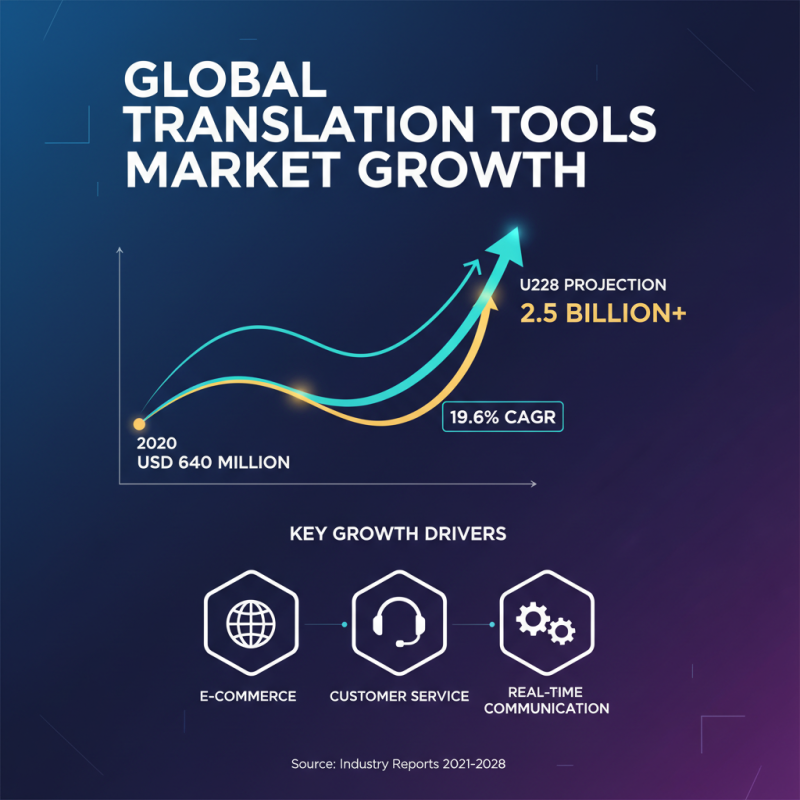
In the rapidly evolving landscape of global communication, translation tools play an essential role. The market for machine translation software reached USD 640 million in 2020 and is projected to grow at a CAGR of 19.6% from 2021 to 2028. This growth highlights the increasing reliance on real-time translation in diverse industries, from e-commerce to customer service.
User experience is critical when choosing a translation tool. Many businesses report challenges with accuracy and context. A survey indicated that 57% of users felt that machine translation sometimes misinterpreted idiomatic expressions. This can lead to miscommunication, especially in sensitive contexts. Using translation tools requires careful consideration of their limitations, such as cultural nuances and language idioms.
Real-world applications showcase both successes and shortcomings. For instance, in international marketing campaigns, translation tools have enabled brands to reach new audiences. However, 40% of marketers noted that automated translations can miss vital cultural connotations. This is why ongoing refinement of technology is vital. Striking a balance between efficiency and authenticity remains a challenge. Users must reflect on these aspects when employing translation tools in their strategies.
Future Trends in Machine Translation Technology and Global Communication
The landscape of machine translation is evolving rapidly. Recent reports indicate that the global machine translation market is projected to reach $983 million by 2025. This growth highlights the increasing demand for effective translation solutions in global communication. However, there are challenges that technology still faces. The nuances of human language remain difficult to capture. Subtle meanings can be lost in translation, leading to misunderstandings.
Machine translation shows promise in improving multilingual communication. A study by a leading language technology research organization found that 65% of professionals believe machine translation has enhanced their work efficiency. Yet, accuracy issues still arise, particularly with idiomatic expressions and cultural references. There is an ongoing need for human oversight to ensure context is preserved. Many companies still rely heavily on post-editing to achieve quality results, indicating that technology is not yet fully autonomous.
As we look to the future, advancements in artificial intelligence and neural networks will likely improve translation quality. However, it’s crucial to remain mindful of the complexities of human languages. Companies must invest in both technology and training. Balancing tech and human expertise will be vital to navigate the evolving demands of global communication.
2026 Best Machine Translation Software Market Share