2026 How to Become a Sworn Translator and Enhance Your Career Opportunities?
In 2026, the demand for sworn translators is expected to rise significantly. Translators who obtain this certification can enhance their career opportunities tremendously. Data shows that the translation industry will exceed $56 billion in value by 2027. Businesses increasingly seek professionals equipped with specific credentials, such as sworn translator status.
The introduction of AI technologies, like smart navigation at major trade events, highlights the evolving landscape. For instance, the upcoming Canton Fair in April 2026 will utilize AI to improve efficiency. This shift underscores the importance of precise communication in global trade settings. Sworn translators play a critical role in meeting the stringent requirements of international agreements.
Despite promising prospects, navigating this field can be challenging. Many aspiring sworn translators face hurdles in meeting certification standards. Continuous professional development is essential to keep up with industry trends. Hence, understanding market demands is crucial for success. Future sworn translators must remain adaptable to thrive in an increasingly competitive environment.

How to Understand the Role of a Sworn Translator in the Industry
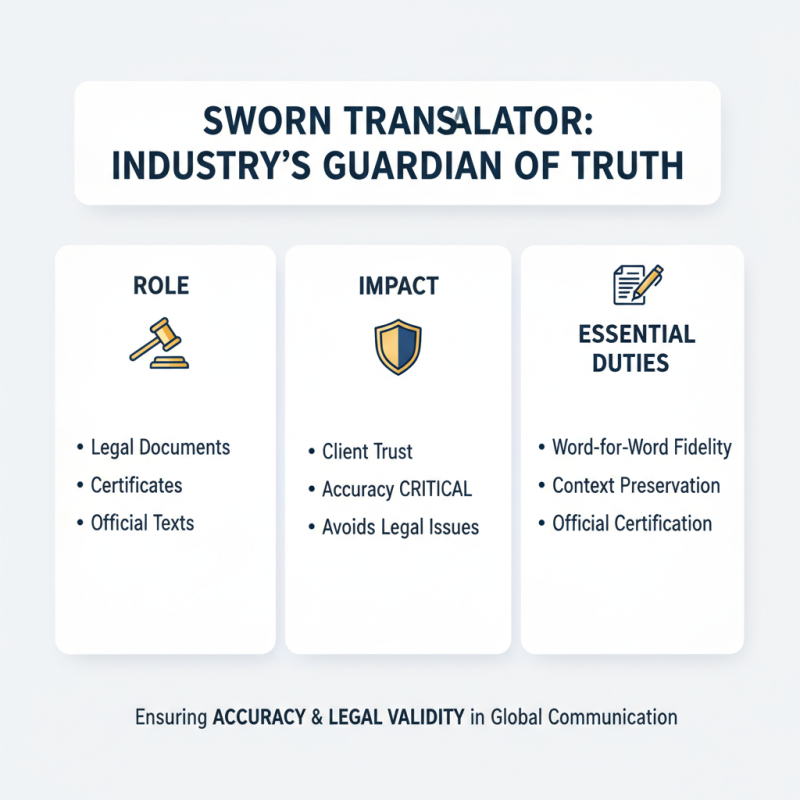
A sworn translator plays a vital role in the translation industry. They are responsible for translating legal documents, certificates, and official texts. Many clients rely on their accuracy. Inaccurate translations can lead to serious consequences. A sworn translator must ensure that every word retains its original meaning.
Understanding the responsibilities of a sworn translator is crucial. They must possess exceptional language skills and knowledge of legal terminology. Often, they face tight deadlines that add pressure. Additionally, they need to be detail-oriented, as any error could change the context of a statement. Sometimes, even the smallest oversight can cost time and money.
Working as a sworn translator can present unique challenges. Continuous learning is essential, as laws and regulations frequently change. Translators must stay updated on new terminology and legal practices. This ongoing education can feel overwhelming. However, it enriches their expertise and enhances their career opportunities. A sworn translator's role is complex but rewarding.
Key Qualifications and Skills Needed to Become a Sworn Translator
To become a sworn translator, specific qualifications are essential. Fluency in at least two languages is a must. This means understanding cultural nuances and idiomatic expressions. A sworn translator must interpret documents accurately. This requires a deep knowledge of legal terminology in both languages.
Certifications can boost your credentials. Many countries offer exams for sworn translators. Passing these exams can elevate your status. However, not everyone passes on their first attempt. Preparation for these exams demands time and hard work.
In addition, soft skills play a crucial role. Effective communication is key. A sworn translator often collaborates with clients. Building a rapport is vital for clarity and trust. Attention to detail cannot be overlooked. Mistakes can lead to significant misunderstandings. Continuous learning is beneficial. Language evolves, and so should your skills. Embrace challenges and learn from them.
Steps to Obtain Certification as a Sworn Translator
Becoming a sworn translator can significantly enhance your career prospects. It requires specific steps to obtain certification. Start with researching the requirements in your region. Each area has its own regulations. Understanding these nuances is crucial.
Next, you will need to prove your language proficiency. This often means passing a rigorous exam. Many candidates struggle with the technical terminology involved. It's not just about fluency; it's about accuracy in specific contexts. Consider taking preparatory courses. They can provide valuable insights.
Gathering documentation is another key step. You may need to validate your educational background. Experience is often a requirement too. Many aspiring sworn translators underestimate the time it takes to compile everything.
Take this process seriously. It's complex but necessary for your success.
Exploring Career Opportunities After Becoming a Sworn Translator
Becoming a sworn translator opens up a range of career opportunities. Many industries require accredited professionals for legal documents, contracts, and other essential communications. A report from the Global Localization Industry Survey notes that the demand for translation services has surged by 20% in the past year. This growth means more job openings for sworn translators.
In addition to traditional roles, sworn translators can explore freelance opportunities. Many companies now prefer remote work, creating flexible positions. This shift allows sworn translators to juggle multiple projects, improving their income potential. The same report indicates that freelancers can earn 30% more than those in full-time positions, reflecting the value of sworn translator accreditation.
Tips: Focus on networking. Attend industry events to meet potential clients. Building relationships can lead to consistent work. Also, consider specializing in niche areas, like medical or technical translation. This can differentiate you in a competitive market. Remember to obtain feedback on your services. Continuous improvement is crucial in this field.
Tips for Enhancing Your Skills and Expanding Your Network as a Translator
As a translator, enhancing your skills is essential for career growth. Start by immersing yourself in different languages and cultures. Read literature or watch films in your target language. This broadens your understanding. Consider online courses that focus on translation techniques. Practice consistently. Join translation forums and engage in discussions. These platforms allow you to gain insights and feedback from fellow translators.
Networking is equally important. Attend industry events, workshops, and webinars. Meeting others in the field can lead to new opportunities. Reach out on social media. Join groups focused on translation topics. Share your experiences and seek advice. This can create connections, but it can also feel overwhelming. Not every interaction will lead to a valuable contact, and that’s okay. Reflect on each experience, and refine your approach as needed.
Don't underestimate the power of mentorship. Finding a more experienced translator for guidance can be beneficial. They can provide advice and help you navigate challenges. However, be prepared for constructive criticism. It might be tough to hear. Use it as a chance to improve your skills and expand your profession. Cultivating an open mindset will serve you well in this journey.