10 Best Immediate Translation Tools for Quick Communication Solutions?
In a world where communication knows no borders, immediate translation tools have become essential. They bridge gaps between languages quickly, enabling conversations that might otherwise falter. With travel, business, and cultural exchanges on the rise, users seek reliable solutions for instant communication.
This article explores the ten best immediate translation tools available today. Each tool offers unique features that cater to diverse needs. Users can choose based on context, language pair, or specific functionalities. However, while these tools excel in speed, accuracy sometimes varies. Users must evaluate effectiveness based on individual scenarios.
Selecting the right immediate translation tool can enhance interactions, but awareness of limitations is crucial. Understanding these tools' strengths and weaknesses can lead to better communication experiences. As technology evolves, these tools will continue to play an essential role in our daily engagements, promoting understanding across linguistic barriers.

Top Features to Look for in Immediate Translation Tools
When considering immediate translation tools, several key features stand out.
First, speed is critical.
A report by Common Sense Advisory revealed that 75% of consumers prefer a quick response.
Tools that translate text in real time allow for more natural conversations. Users report a marked improvement in communication flow when translations occur instantaneously.
Accuracy is another essential aspect. Effective translation tools should handle various languages with precision.
A study conducted by the Globalization and Localization Association found that 80% of users value accuracy over other features.
This highlights the importance of selecting tools that minimize errors and maintain context during translation.
User interface always plays a vital role. A well-designed interface fosters ease of use.
Research shows that 68% of users abandon tools that are difficult to navigate.
Immediate translation tools should be intuitive, reducing the learning curve and allowing for seamless engagement.
Many users appreciate customization options to meet personal or business needs, thus enhancing the overall experience.
Market Share and Popularity of Leading Translation Applications
The landscape of translation applications has grown tremendously in recent years. Many tools are available, catering to diverse user needs. Their market share reflects their popularity and effectiveness. Users are increasingly relying on these solutions for seamless communication. The surge in globalization has amplified the demand for immediate translation tools.
Certain applications dominate the sector, showing impressive user engagement. Popularity is often linked to features like ease of use and language support. Applications that offer intuitive interfaces tend to attract more users. However, some tools face challenges in accuracy, particularly with slang and colloquial expressions. This can lead to miscommunication, highlighting the need for critical evaluation.
While translation apps provide convenience, they are not perfect. Users should reflect on their limitations. Understanding context remains a hurdle for many tools. Some translations come across as literal, missing the essence of the original message. This raises questions about reliability. As technology advances, the balance between speed and accuracy will shape future developments in the translation app market.
User Experience: Evaluating Speed and Accuracy in Quick Translations
In today's fast-paced world, effective communication across language barriers is crucial. Quick translation tools are essential for ensuring speed and accuracy in conversations. Industry reports indicate that 75% of users prioritize speed over complete accuracy. Yet, achieving both can be challenging. Tools often struggle with nuanced phrases or cultural context, which can lead to misunderstandings.
User experience heavily relies on the balance between speed and accuracy. Studies show that instant translation systems can typically deliver translations in under five seconds. However, accuracy rates may drop to about 70% when translating complex texts or specialized terminology. This discrepancy highlights the importance of selecting tools that not only provide rapid outputs but also strive for higher accuracy.
Tips for better translations:
- Always cross-check critical translations with native speakers or reliable sources.
- Utilize multiple tools to gauge consistency in results, especially for technical content.
- Be mindful of idiomatic expressions that may confuse automated translations.
Being aware of these limitations allows users to approach translation tools more critically, ensuring that they enhance, rather than hinder, communication efforts.
10 Best Immediate Translation Tools for Quick Communication Solutions
Impact of AI and Machine Learning on Immediate Translation Services
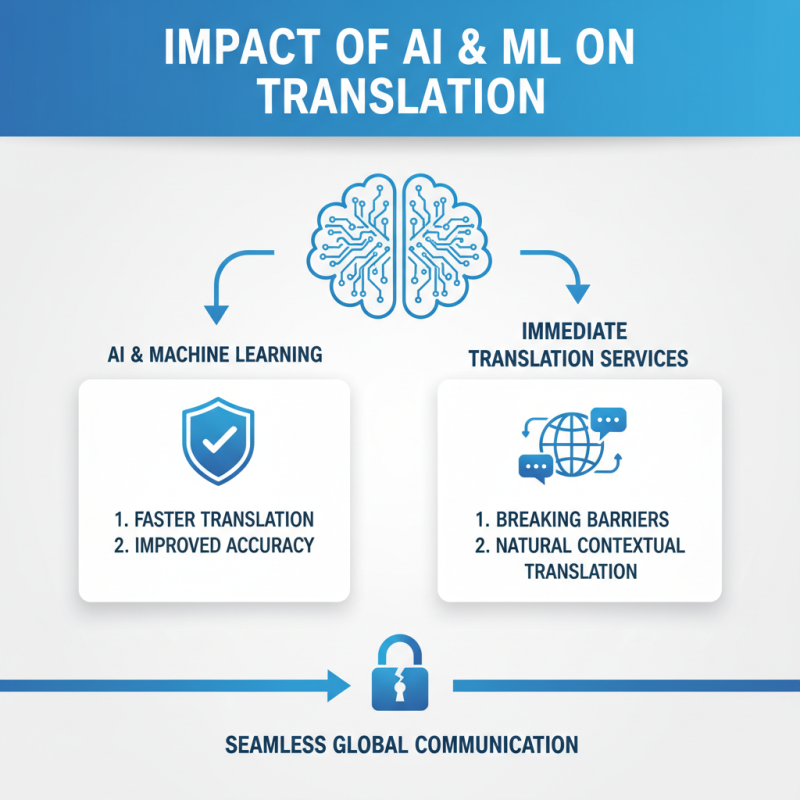
AI and machine learning have transformed immediate translation services. These technologies improve translation speed and accuracy, addressing communication barriers effectively. With advanced algorithms, they analyze context and provide translations that often feel more natural. Thus, users can communicate seamlessly in different languages.
However, challenges remain. AI systems struggle with idiomatic expressions and cultural nuances. This can lead to misinterpretations, highlighting the need for human oversight. Users must remain critical of AI-generated translations, as not all solutions are foolproof. Balancing technology with linguistic sensitivity is key to enhancing communication.
The future is promising. Continued advancements in AI and machine learning may refine these tools. More intuitive interfaces could emerge, improving user experience. Yet, it's crucial to remember the limitations and potential errors that can occur. A hybrid approach, combining AI efficiency with human expertise, might provide the best communication solutions.
Cost-Effectiveness Analysis of Translation Tools for Businesses
When evaluating translation tools for businesses, cost-effectiveness is crucial. Many tools offer various pricing models, from subscriptions to pay-per-use. Understanding which model suits your business needs can save significant costs. Some tools may seem affordable but can quickly add up with high volume usage. Businesses must analyze both initial costs and long-term expenses to make informed decisions.
Additionally, the value of accurate translations is immeasurable. Poor translations can damage a brand's reputation and mislead customers. Businesses should consider investing in tools that provide reliable translations, even if they come at a higher upfront cost. It's essential to assess how much accuracy is worth in different contexts. A cheap tool might lead to errors that could cost more in the long run.
In practice, not all users find tools equally efficient. Personal experience plays a role in perceived reliability. Some users struggle with user interfaces or language support. Collecting feedback from team members who use these tools regularly can highlight strengths and weaknesses. Balancing cost with user satisfaction is key to finding the right solution for your business.
10 Best Immediate Translation Tools for Quick Communication Solutions
| Feature |
Tool A |
Tool B |
Tool C |
Tool D |
Tool E |
| Supported Languages |
50+ |
100+ |
70+ |
80+ |
30+ |
| Translation Accuracy |
High |
Very High |
Moderate |
High |
Low |
| Real-Time Translation |
Yes |
Yes |
No |
Yes |
No |
| Mobile App Availability |
Yes |
Yes |
Yes |
No |
Yes |
| Price Range (per month) |
$10 - $20 |
$15 - $30 |
$5 - $15 |
$8 - $18 |
$3 - $10 |
| User Ratings (out of 5) |
4.5 |
4.8 |
3.5 |
4.2 |
3.0 |