What is Immediate Translation and How Does It Work?
Immediate translation has emerged as a vital tool in our increasingly interconnected world. It's not just about translating words; it’s about conveying meaning in real-time. This method allows individuals to communicate effectively across different languages.
Imagine a business meeting where participants speak various languages. With immediate translation, everyone can participate seamlessly. This technology bridges communication gaps that could hinder progress. Yet, it’s not perfect. Misinterpretations can occur, leading to confusion.
The rise of immediate translation tools offers countless possibilities. However, one must consider nuances in language and culture. While immediate translation is beneficial, it requires careful usage. Balancing speed and accuracy is critical for effective communication.
What is Immediate Translation?
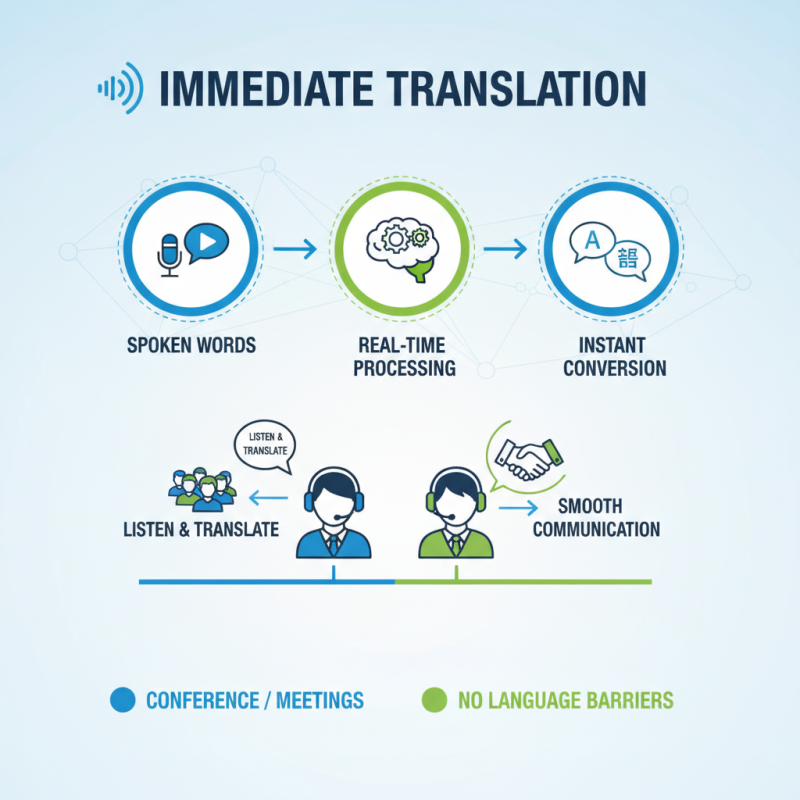
Immediate translation refers to the rapid conversion of spoken words from one language to another. This process often occurs in real-time settings, such as conferences or meetings. The goal is to allow participants to communicate without language barriers. Translators listen and translate instantly, ensuring smooth conversations.
In practice, immediate translation can be quite challenging. Translators must think quickly and have a strong command of both languages. They often work under pressure, trying to convey not just words but also tone and nuance. Misunderstandings can easily happen. The pressure to keep up with fast-paced dialogue can lead to small errors. These mistakes, while minor, can alter the meaning of what is being said.
Technology plays a role in immediate translation. Devices and apps provide support, but they aren't perfect. Relying solely on technology may lead to important details getting lost. Human translators bring cultural context that machines cannot capture. This aspect is crucial in effective communication. Striking the right balance between speed and accuracy remains a significant challenge.
The Process of Immediate Translation Explained
Immediate translation is a real-time translation process. It is used in various scenarios, such as conferences, meetings, or broadcast events. This method guarantees that audience members can follow discussions instantly. According to a recent industry report from the Global Language Services Market, the demand for immediate translation services has seen a surge of 28% annually.
The process involves skilled interpreters who listen to the speaker and provide simultaneous translation. They must work rapidly, translating ideas without losing context or nuance. A study by the International Association of Conference Interpreters noted that about 70% of interpreters find maintaining accuracy challenging under pressure. Stress and fatigue can impact performance, causing misunderstandings.
Moreover, technology plays a vital role. Many interpreters now rely on advanced tools and software to assist their work. However, even with tools, nuances of language can lead to errors. An estimated 15% of clients experienced miscommunication due to language barriers. Immediate translation is not just a skill but an ongoing challenge. It requires constant reflection and adaptation in a fast-paced environment.
What is Immediate Translation and How Does It Work? - The Process of Immediate Translation Explained
| Aspect |
Description |
Example |
| Definition |
Immediate translation refers to the instant conversion of spoken or written content from one language to another. |
An interpreter translates a speech in real-time during a conference. |
| Process |
It involves listening to the original content, processing it mentally, and articulating the translation within seconds. |
A live translation during a business meeting. |
| Techniques |
Common techniques include sight translation, consecutive translation, and simultaneous translation. |
Using headsets for simultaneous translation during an event. |
| Applications |
Used in conferences, international business meetings, and diplomatic discussions. |
UN meetings with multiple language representations. |
| Challenges |
Requires high concentration, quick thinking, and thorough knowledge of both languages. |
Technical jargon in a medical conference can pose difficulties. |
Technological Tools Used in Immediate Translation
Immediate translation is transforming communication in real-time. This technology relies heavily on various tools to deliver accurate translations instantly. According to a recent report by the
Global Language Services Market, the demand for real-time translation has surged by 50% in the last two years. This spike indicates a growing reliance on effective communication across languages.
One of the core technological tools used in immediate translation is machine translation software. These tools harness artificial intelligence to analyze and convert text simultaneously. For example, natural language processing algorithms enable context-aware translations, making conversations smoother. However, they still face challenges, especially with idiomatic expressions and cultural nuances. A study found that 30% of translations lack accuracy in capturing these subtleties.
Another critical aspect involves live translation apps. These applications often include speech recognition features that facilitate voice translations. While they enhance accessibility, they also make errors in noisy environments. Human translators may miss intricate meanings when rushing to deliver instant translations. Reports suggest that approximately 20% of users experience dissatisfaction with translation contexts in real-time scenarios.
Applications of Immediate Translation in Various Fields
Immediate translation has become vital in numerous sectors, from healthcare to technology.
In healthcare, immediate translation aids in patient communication.
A report from the World Health Organization indicates that effective communication can improve patient outcomes by up to 30%.
Accurate translations can reduce medical errors, ensuring patients receive the right care.
Translators need to understand medical terminology well, as misinterpretations can be life-threatening.
In the tech industry, immediate translation enables real-time communication among developers and clients from different countries.
This enhances collaboration on projects and speeds up innovation.
A survey by Statista shows that 75% of tech professionals believe immediate translation tools have increased productivity.
However, challenges remain.
Nuances in technical language can lead to misunderstandings.
Many tech workers express frustration when translations do not capture specific meanings.
In the legal field, immediate translation is crucial during court proceedings.
Misinterpretations can alter case outcomes significantly.
The American Bar Association highlights that 20% of legal disputes involve language barriers.
Translators must have legal expertise to avoid pitfalls.
There is a fine line between clarity and accuracy.
While immediate translation helps bridge gaps, it can also introduce errors that affect justice.
The need for quality assurance in translations is clear.
Challenges and Limitations of Immediate Translation
Immediate translation plays a crucial role in today's fast-paced communication. However, it comes with distinct challenges. Accuracy is often compromised in spontaneous situations. The translator may miss nuances or cultural contexts, leading to misunderstandings. This is critical in sensitive conversations where the tone matters.
Time constraints can overwhelm even experienced translators. They must think and convey ideas simultaneously. This pressure can result in rushed translations, diminishing quality. The need for quick responses can lead to simple errors. Such mistakes can change the intended meaning or offend individuals.
Additionally, subject matter complexity poses obstacles. Specific topics require specialized vocabulary and knowledge. A general translator might struggle. This limitation emphasizes the need for skilled professionals in various fields. The demand for immediate translation can expose gaps in training and expertise. Continuous reflection on these challenges is necessary for improvement.