How to Obtain Certified Translation for Your Important Documents?
Obtaining certified translation for important documents is crucial in today's globalized world. According to the Globalization and Localization Association, the certified translation market is expected to grow by 6.5% annually. This highlights the increasing demand for accuracy in legal, medical, and academic translations. Expert translator Emily Cheng emphasizes the importance of this process, stating, "Certified translation ensures that your documents are legally recognized and accepted."
Many individuals underestimate the complexity of obtaining certified translation. It often requires specific qualifications and adherence to legal standards. Additionally, varying requirements across countries can create confusion. For instance, what is acceptable in one jurisdiction may not be in another.
Inadequate attention to detail in certified translation can lead to significant issues. Errors may result in document rejection or legal complications. Therefore, it's essential to work with experienced professionals. Take time to understand the nuances and importance of certified translation. This will ensure that your documents maintain their integrity and serve their intended purpose.

What is Certified Translation and Why is it Important for Documents?
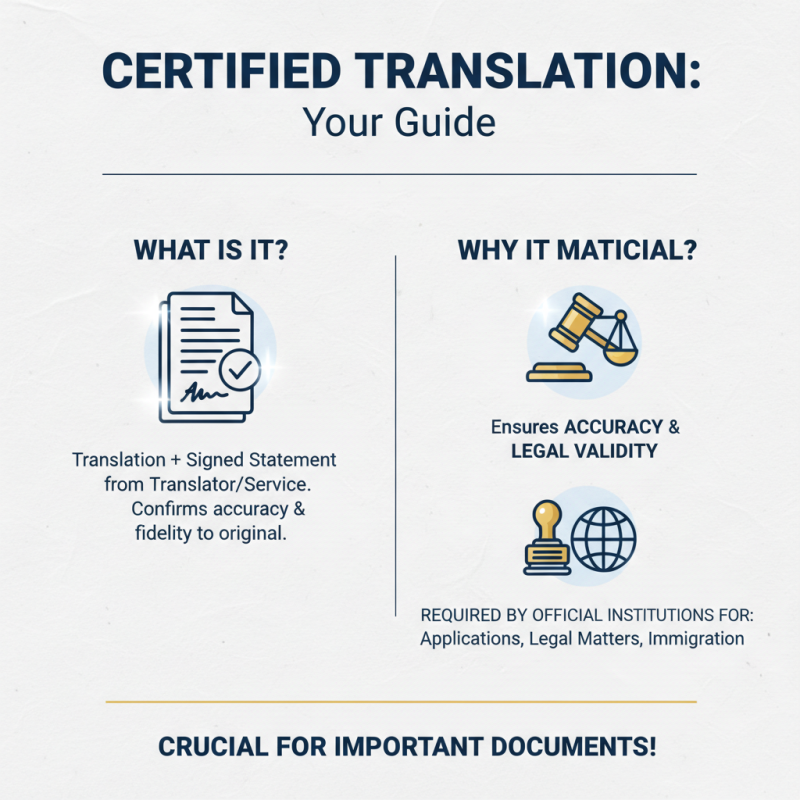
Certified translation is crucial for various important documents. It ensures accuracy and legal validity. What exactly is certified translation? It's a translation that comes with a signed statement from a translator or service. This statement confirms that the translation is true and faithful to the original. Many official institutions require it for applications, legal matters, and immigration processes.
The importance of certified translation cannot be overstated. When you're dealing with vital documents, any error can have serious consequences. Inaccurate translations may lead to misunderstandings or even denials. For instance, think about applying for a visa. If your birth certificate is not accurately translated, your application could be delayed, or worse, rejected. A certified translation adds a layer of credibility that plain translations do not offer.
Moreover, not every translator can provide certified translations. It’s important to choose a qualified professional. Often, people overlook this detail, assuming anyone can translate documents. This assumption can lead to regret later on. Always check for credentials. Remember, taking shortcuts in translation might save time now, but it can complicate your future. It's essential to invest in certified translation for peace of mind.
Understanding the Legal Requirements for Certified Translations in Different Countries
When seeking certified translations, it's crucial to understand legal requirements, which vary by country. For instance, in the United States, certified translations are often required for immigration documents. A report from the American Translators Association indicates that 97% of U.S. immigration applications involve certified translations.
Countries like Canada and the UK have distinct criteria as well. In Canada, certified translators must be members of professional associations. In contrast, the UK accepts translations without a specific certification, but they must include a signed statement attesting to accuracy. This discrepancy can lead to confusion, especially for those unfamiliar with local laws.
Tips: Always verify the credentials of your translator. Look for professional certifications or memberships in recognized organizations. This can prevent delays in document processing. Additionally, remember that some organizations may require notarization alongside certification. It's essential to confirm these details beforehand.
Without understanding these nuances, applicants risk rejection or delays. It's a reminder that each country's legal landscape shapes translation requirements differently. Being proactive in gathering this information can make a significant difference in your experience.
Certified Translation Requirements by Country
This chart illustrates the certification requirements for translation across different countries, rated on a scale of 1 to 5. A higher score indicates more stringent requirements. Understanding these varying requirements is crucial for ensuring compliance with legal standards when obtaining certified translations for important documents.
Steps to Obtain a Certified Translation from a Professional Service
Obtaining a certified translation for important documents can seem daunting. However, breaking the process into manageable steps helps. Start by
identifying a professional translation service that specializes in certified translations. Look for their qualifications and reviews. A good service should offer expertise in the
specific field of your documents, whether it’s legal, medical, or technical.
Next, gather the documents you need translated. Ensure they are clear and complete. Poor-quality scans or missing pages can lead to delays. Once you submit your documents,
the service will provide a quote. This may vary based on the document type and length. After agreeing on the terms, expect a timeline for completion. Keep in mind that
unexpected issues may arise, so allow for some flexibility.
Finally, once your translation is ready, review it carefully. Check for accuracy and completeness. Sometimes, a small detail may be overlooked. If something seems off,
don’t hesitate to ask for clarification. A certified translation often includes a declaration that ensures authenticity. This is crucial for legal
or official purposes, so understanding the end product is essential.
Finding Qualified Certified Translators: Key Credentials to Look For
When searching for a certified translator, focus on their credentials. Look for certifications from recognized professional organizations. These may indicate a translator's experience and expertise. Some translators may have degrees in translation or linguistics. This is often a good sign, though not always essential.
Experience in the specific field of your documents is crucial. A legal document may require a translator with legal knowledge. Medical documents need someone familiar with medical terminology. Check for testimonials or references from past clients. This can provide insight into their reliability and accuracy.
Not every translator will meet every expectation. Some may lack experience in niche areas. Others may provide slow response times. It’s essential to weigh these factors when selecting a translator. Your goal is to ensure accuracy without compromising timelines. Prioritize qualified professionals who communicate clearly.
How to Obtain Certified Translation for Your Important Documents? - Finding Qualified Certified Translators: Key Credentials to Look For
| Credential Type |
Description |
Importance |
| ATA Certification |
Certification by the American Translators Association, demonstrating proficiency in translation. |
Highly regarded in the industry; ensures quality and professionalism. |
| NAJIT Certification |
Certification from the National Association of Judiciary Interpreters and Translators. |
Indicates specialization in legal translation; important for legal documents. |
| ISO Certification |
International Organization for Standardization certification for translation services. |
Signals adherence to international quality standards. |
| Specialized Training |
Formal education or training in translation or linguistics. |
Foundation of skills; ensures the translator has knowledge of language nuances. |
| Professional Memberships |
Membership in professional translation organizations. |
Indicates commitment to the profession and ongoing professional development. |
Cost Factors Involved in Certified Translation Services and Budget Planning
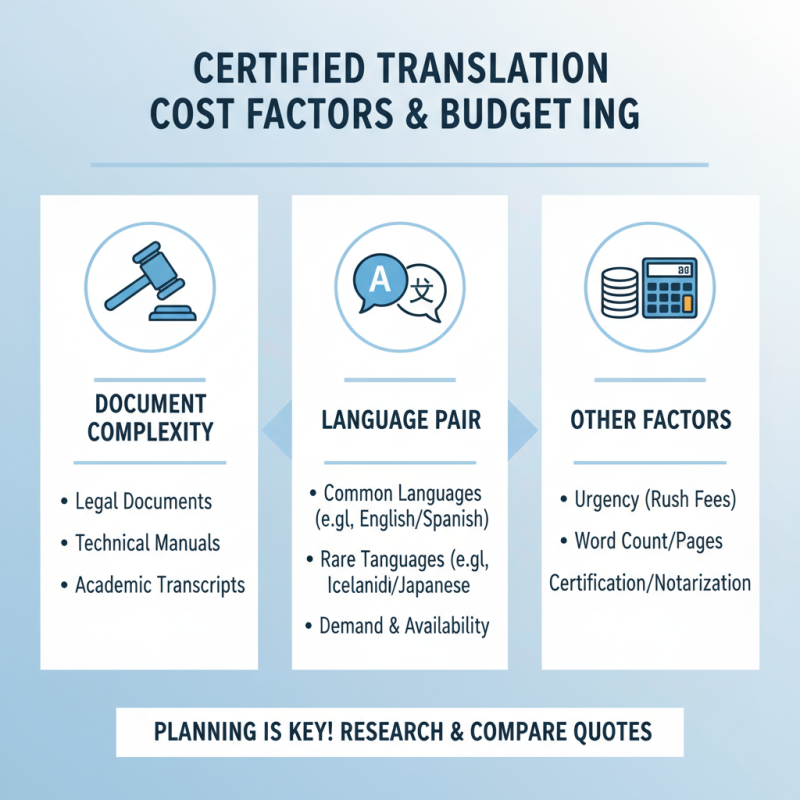
When planning for certified translation services, understanding cost factors is crucial. Prices can vary widely based on several elements. The complexity of the document plays a significant role. Legal documents, for example, often require more expertise than simple personal letters. The language pair can also impact the overall cost. Some languages are rarer, leading to higher prices.
Additional factors contribute to the total expense. Turnaround time is essential. If you need a quick translation, expect to pay a premium. Quality assurance processes may add to the expense as well. However, opting for the cheapest service may not always yield the best results. It’s important to balance quality and cost when making a choice.
Budgeting for certified translations demands careful consideration. Often, clients overlook hidden fees like notarization or delivery costs. Setting aside an appropriate amount can help avoid surprises. Make sure to request detailed quotes from several providers. Be cautious of anyone offering drastically lower rates; they may compromise quality. Always prioritize clear communication about your needs and expectations.