Who Are the Top Automatic Translator Manufacturers in China?
Choosing a leading automatic translator manufacturer in China takes more than comparing product photos or advertised language counts. Buyers should examine translation accuracy, response time, microphone performance, battery life, privacy controls, and after-sales support. A quiet showroom is not a busy airport. Real conversations bring accents, background noise, interrupted speech, and unfamiliar names.
Speech-translation researcher Alexander Waibel’s work points to a practical principle: translation technology must support real communication, not merely perform well in demonstrations. That distinction matters. A device may handle a clear greeting yet struggle with a fast question beside a rattling train. This guide compares Chinese manufacturers through product capabilities, technical experience, manufacturing focus, and evidence available to buyers. It also considers how well companies explain limitations. That part is easy to miss.
No single brand suits every traveler, retailer, or enterprise. Some manufacturers emphasize handheld translators, while others build earbuds, software platforms, or customized devices. Claims deserve careful checking. Ask how products handle offline translation, regional accents, updates, and warranty repairs. Seek independent testing where possible, and confirm specifications with the manufacturer. A polished demo can still leave gaps. The comparison ahead aims to identify promising suppliers without treating marketing claims as proof. It is not a perfect map; product lines change, and public information can be thin. Still, careful questions can make the shortlist more useful and the final choice less of a guess.
What Is an Automatic Translator and How Does It Work?
An automatic translator converts speech or text from one language into another with minimal human input. In a handheld device, a microphone captures speech, and speech recognition turns the sound into text. A neural machine translation model then predicts a suitable translation from patterns learned across large multilingual datasets. Speech synthesis can read the result aloud through a small speaker. The process may take only seconds. Yet each step can introduce errors, especially with accents, noisy rooms, or specialist terms.
Performance depends on more than the translation model. A device may process audio through an internet connection or use downloaded language data offline; the latter can be less flexible. Grand View Research estimated the global machine translation market at USD 982.3 million in 2022, with a projected 13.5% compound annual growth rate from 2023 to 2030. This signals growing adoption, not guaranteed accuracy. A useful test is practical: ask the device to translate a short request in a busy café, then check names, numbers, and tone. Small misses matter. I would not trust one output blindly; translation still needs context and, sometimes, a human review.
How Is China’s Automatic Translator Industry Structured?
China’s automatic translator industry is built around several connected layers. Hardware makers design handheld units with microphones, speakers, screens, batteries, and wireless connections. Many rely on regional electronics suppliers for circuit boards, casings, and other components. Small details matter: a weak microphone can struggle in a busy station, even when the software is capable.
Software teams handle speech recognition, translation, and voice output. Some services run through cloud systems, while others offer limited offline functions. This affects response speed, language coverage, and performance when internet access is poor. It also means device quality depends on more than the casing or processor. Testing across accents and noisy settings is essential, though real-world coverage can never be perfect.
The wider structure includes product developers, contract manufacturers, software providers, and distributors. Their roles can overlap, so a neat diagram may hide important differences in technical control. Buyers should ask who maintains language models and how often updates are released. A polished demonstration is useful, but not enough. Long-term reliability needs evidence from repeated use, and that evidence is not always easy to compare.
Which Manufacturers Lead China’s Automatic Translator Market?
China’s automatic translator market is led by makers combining language software, compact hardware, and dependable support. Leading suppliers often target travel, retail counters, meetings, and field work. In these settings, fast speech capture matters more than a crowded feature list. Compare language pairs, offline performance, microphone pickup, battery life, and update frequency. A quiet-room demo can flatter a device. Test it near traffic or overlapping voices.
Manufacturers with in-house engineering and stable supply chains may respond faster to software issues and changing language needs. Yet leadership is not always clear in sales rankings; public figures rarely reveal how well a device handles accents, code-switching, or technical terms. Ask for repeat tests using your own phrases, then check whether transcripts are easy to correct. Small details count. A physical mute button, clear privacy settings, and plain-language service instructions can matter in daily use. No device is flawless. Some translations still sound stiff, and that deserves scrutiny. For buyers, the most credible manufacturer documents limitations, offers realistic demonstrations, and supports products after purchase—not simply the one making the loudest claims.
What Products and Technologies Set These Manufacturers Apart?
Chinese automatic-translator manufacturers distinguish themselves through product design as much as translation engines. Handheld units often combine speech translation with camera-based text recognition, useful for reading menus or signs. Earbud systems support quieter, hands-free conversations, while meeting terminals add microphones designed to capture several speakers. Some devices store language packs for offline use. That matters in airports or rural areas with unstable connections. Small details count: a readable screen, quick turn-taking, and clear playback can make a device easier to use.
Language coverage needs careful checking. Ethnologue’s 2024 edition lists 7,164 living languages, but a long supported-language list does not guarantee strong dialect handling. CSA Research estimated the global language-services market at US$49.6 billion in 2019, reflecting broad demand for language support, not proof that every device translates well. Buyers should test noisy speech, accents, and camera text before comparing headline features. No device is magic. Offline translation may also be less fluent than cloud processing, and manufacturers do not always explain that trade-off clearly. Microphone arrays, noise reduction, and speech recognition can improve results, yet they cannot remove ambiguity from a rushed sentence. That gap deserves attention.
What Sets China’s Automatic Translator Manufacturers Apart?
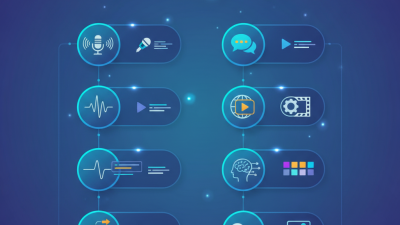
Typical core processing stages in automatic translation products
Text translation typically uses a machine-translation stage. Speech translation commonly combines speech recognition, machine translation, and speech synthesis; camera translation commonly combines text recognition, machine translation, and translated-text display. These are typical workflow stage counts, not manufacturer rankings or performance measurements; implementations can vary.
How Can Buyers Compare Chinese Automatic Translator Manufacturers?
Comparing Chinese automatic translator manufacturers starts with the device’s real working conditions, not a feature list. Ask for a live demonstration using your target languages and a room with ordinary background noise. Test short questions, names, and numbers. These often expose recognition problems quickly. Test it live.
Check translation speed and accuracy separately. A fast response can still distort meaning. Request sample recordings or run the same scripted conversation on each device. Include accents and technical terms your customers actually use. Ask whether translation works offline, which languages are supported, and how updates are delivered. Details matter.
Manufacturing capability deserves equal attention. Ask how incoming components and finished units are inspected, and request written test procedures where available. Compare sample consistency, battery life, microphone pickup, charging options, and repair arrangements. A polished sample may not reflect a large production order, so ask how quality is checked across batches. Review warranty terms, customization limits, delivery estimates, and communication during product changes. If software connects to external services, clarify what data is processed and how access is controlled. A simple comparison sheet helps, though it cannot capture every noisy shop floor or rushed meeting. I would leave room for a second test; one demonstration is rarely enough.