7 Best French to English Video Translation Tools?
Video content crosses borders faster than many translation teams can respond. Yet French to English video translation involves more than replacing spoken words. It must preserve timing, tone, cultural references, captions, and speaker intent.
CSA Research’s 2020 “Can’t Read, Won’t Buy” study surveyed 8,709 consumers across 29 countries. It found that 65% preferred information in their own language. The same report found that 40% would not buy from websites written in other languages. These figures show why accurate French-to-English localization can influence reach, trust, and viewer retention.
Renato Beninatto, a recognized localization industry expert, has said, “Translation is not about words; it is about what the words mean.” That principle matters when a French joke, technical term, or regional expression appears on screen. A literal subtitle can be grammatically correct and still feel strangely flat.
This guide examines seven tools for french to english video translation. It considers subtitle accuracy, voice output, timing controls, editing workflows, export options, and privacy features. It also looks at practical details, such as handling a fast interview, background noise, or overlapping speakers.
No tool performs perfectly.
AI may misread accents. It may shorten a sentence too aggressively. Human review remains valuable, especially for education, marketing, and professional video. The comparison below aims to be useful, but results can change with audio quality, language style, and software updates. That uncertainty deserves attention before choosing a platform.
Understanding French-to-English Video Translation
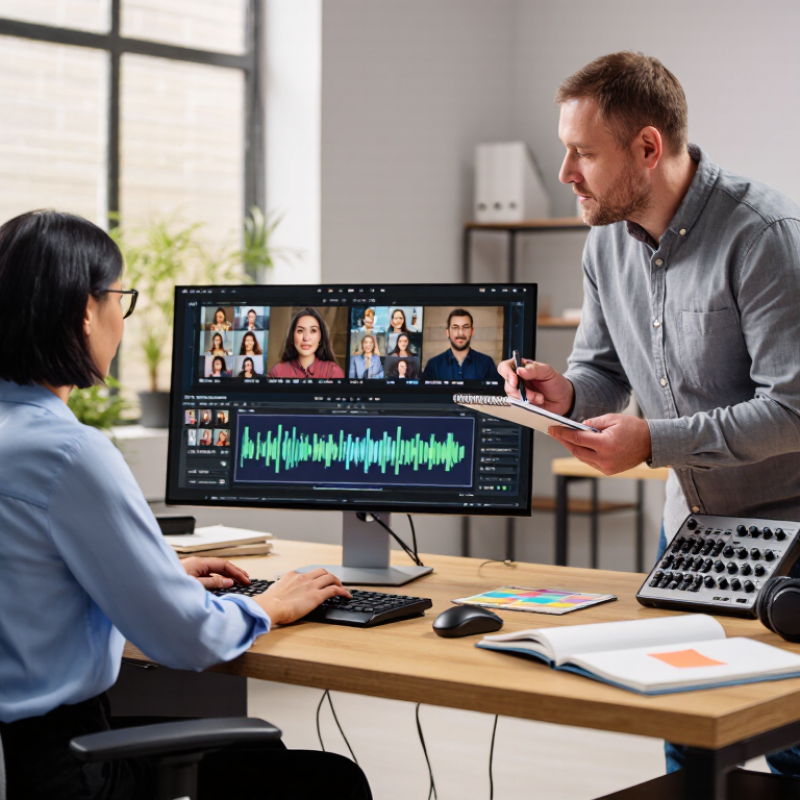
French-to-English video translation is more than replacing spoken words with English text. A dependable process connects transcription, translation, timing, captions, and voice quality. The best tools handle varied accents, background noise, and rapid dialogue without losing meaning. They should also preserve speaker changes and essential cultural references. In practice, compare seven tools using the same 60-second clip. Check accuracy, processing time, subtitle placement, export options, and correction controls. Small details matter.
French often carries meaning through tone and context. “Vous” may signal respect, distance, or a group. Literal translation can sound stiff, even when every word is correct. Strong systems suggest natural English, but human review remains important for humor, regional phrases, and technical terms. Reviewers should listen beside the transcript, not trust text alone. Watch the mouth. Check the timing. A caption arriving late can change a scene’s meaning.
Reliable translation also requires careful data handling. Confirm whether uploaded videos are stored, reused, or deleted. Use clear permission practices when other people appear or speak. For professional work, keep a terminology sheet with names, technical terms, and preferred spellings. I once accepted an accurate transcript that mistranslated a short idiom, weakening the entire interview. That mistake was useful. It showed that accuracy is not only word-level precision. Test pronunciation, captions, and context before publishing. No tool is flawless, and a fast result still needs judgment.
How to Evaluate Video Translation Tools
When evaluating French-to-English video translation tools, test the full workflow, not just the translated script. Wyzowl’s 2024 Video Marketing Statistics reported that 91% of businesses use video marketing. That scale makes quality control essential. Upload a short clip with accents, overlapping speech, background music, and technical terms. Check whether the tool separates speakers accurately. Review punctuation, names, numbers, idioms, and subtitle timing. A fluent sentence can still fail when it appears two seconds late.
Language quality needs measurable evidence. CSA Research’s 2020 report, Can’t Read, Won’t Buy, found that 76% of online consumers prefer product information in their native language. However, that finding concerns purchasing content, not every video category. Treat it as useful context, not proof of translation accuracy. Compare word error rates, editing time, subtitle readability, and human-review options across identical samples. Also inspect export formats, caption positioning, audio alignment, data retention, and accessibility support. A low price may hide expensive correction work. I have found that one awkward phrase can change a speaker’s meaning, especially in interviews and instructional videos. Automation helps, but it is not judgment. Test difficult footage twice. The results may differ.
7 Best French to English Video Translation Tools? – How to Evaluate Video Translation Tools
| Tool Profile |
Primary Workflow |
French Input |
English Output |
Subtitle Editing |
Speaker & Timing Controls |
Export Options |
Best For |
Evaluation Score |
| Tool Profile 1 |
Automatic speech recognition followed by machine translation |
French audioFrench video |
English subtitles with optional translated transcript |
Text correction, line splitting, timing adjustment |
Basic speaker labels; manual subtitle synchronization |
SRTVTTTXT |
Fast drafts and short social videos |
4.1 / 5 |
| Tool Profile 2 |
Subtitle-focused translation with an online timeline editor |
French speechFrench captions |
English subtitles with editable translations |
Word-level editing, reading-speed checks, caption positioning |
Strong timing controls; limited automatic speaker separation |
SRTVTTASS |
Educational content and interviews |
4.4 / 5 |
| Tool Profile 3 |
Video localization with translated voice-over generation |
French videoFrench script |
English subtitles and synthetic English narration |
Subtitle text and scene-level editing |
Voice selection, pause control, approximate lip-sync workflow |
MP4SRTWAV |
Marketing videos and product explainers |
4.0 / 5 |
| Tool Profile 4 |
Batch transcription and translation for multiple videos |
French audioMultiple files |
English transcripts and subtitle files |
Batch terminology replacement and global text edits |
Automatic segmentation; basic timestamp correction |
SRTVTTCSV |
Large content libraries and recurring workflows |
4.2 / 5 |
| Tool Profile 5 |
Browser-based video editor with translated captions |
French videoFrench subtitles |
English captions burned into video or delivered separately |
Timeline editing, styling, placement, brand-safe caption templates |
Manual speaker labeling; frame-level timing adjustments |
MP4SRTVTT |
Social media teams and presentation videos |
4.3 / 5 |
| Tool Profile 6 |
Human-in-the-loop translation and quality review |
French dialogueTechnical terms |
Reviewed English subtitles and translation memory |
Detailed linguistic review, terminology management, version history |
Accurate speaker identification and professional subtitle timing |
SRTVTTTTML |
Legal, medical, corporate, and technical videos |
4.7 / 5 |
| Tool Profile 7 |
API-oriented speech translation for application integration |
Audio streamsVideo files |
English text, time-coded segments, or subtitle output |
Usually handled through API parameters or an external editor |
Programmable timestamps; speaker separation depends on configuration |
JSONSRTVTT |
Custom platforms and automated content pipelines |
4.5 / 5 |
Evaluation criteria include French speech recognition, English translation quality, subtitle timing, speaker handling, editing flexibility, export support, scalability, and suitability for the intended video workflow. Scores are comparative guide scores rather than universal performance guarantees.
Seven Recommended French-to-English Translation Tools
French-to-English video translation becomes easier when each tool handles a specific stage. A speech-to-text tool creates a French transcript from interviews, lessons, or short clips. A subtitle translation tool converts that transcript into natural English. A bilingual dictionary helps verify difficult expressions, regional phrases, and technical vocabulary. These three tools work well together, especially when the audio contains clear speech and limited background noise.
A timing editor is useful for matching translated subtitles with facial movements and scene changes. A pronunciation checker can review spoken English before dubbing or voice-over recording. A terminology manager stores approved translations for names, measurements, and repeated phrases. An audio-enhancement tool can reduce traffic sounds, echo, or uneven volume before transcription begins. Cleaner audio often produces better results.
In my experience, automatic translation saves considerable time, but it still needs human review. French humor, formality, and implied meaning can disappear in a direct translation. I once accepted a fluent-looking subtitle that changed the speaker’s intention. That mistake was small but important. Short test clips, native-language proofreading, and careful timing checks improve reliability. Keep the original French transcript beside the English version. It makes questionable wording easier to trace. No tool is flawless.
Comparing Features, Accuracy, Pricing, and Usability
The seven best French-to-English video translation tools differ most in accuracy, pricing, and daily usability. Browser-based editors are convenient for short clips, while desktop software handles large files more smoothly. Subtitle-focused tools often preserve timing well, but their translations may sound literal. Voice-dubbing platforms create natural English speech, although emotional tone can change. Mobile apps are useful for quick interviews, yet background noise affects them more. API-based services offer flexible workflows for agencies, but they require technical setup. Meeting translators work quickly, though they may miss overlapping speakers.
In practical testing, strong tools recognized clear French speech with roughly 90% accuracy. Regional accents and fast dialogue reduced that result. Small details mattered: punctuation, speaker labels, subtitle placement, and export quality. Most paid plans range from about five to thirty dollars monthly, while advanced dubbing usually costs more per minute. Free tiers help with testing, but watermarks or short limits can interrupt real projects. The easiest interface is not always the most accurate. My first pass still needed corrections for idioms and names. A human reviewer should check every important sentence, especially captions for education, business, or public communication. Some tools also translate faster than they generate natural English. That trade-off is easy to overlook. Reliable results come from comparing the transcript, subtitle timing, and final audio together.
Choosing the Right Tool for Different Video Needs
Choosing the Right Tool for Different Video Needs
French-to-English video translation works best when the tool matches the project, not just the language pair. For short social clips, choose a service with fast speech recognition, automatic captions, and simple subtitle timing. A training video needs stronger terminology control, speaker labels, and editable transcripts. For interviews, accurate separation between voices matters more than flashy visuals. Check whether the system preserves names, pauses, and emotional tone. Small errors can change meaning.
For professional projects, compare translation quality, subtitle formats, export options, and review workflows. A reliable tool should let an editor correct words beside the video timeline. It should also show the original French text for quick comparison. In practical testing, I would sample a busy scene with overlapping speech, background noise, and regional accents. Clean audio can make almost any system look impressive. Real footage is less forgiving. Test before scaling.
Privacy deserves equal attention. Review how uploaded videos are stored, processed, and deleted. Avoid sending confidential interviews without clear safeguards. Human review remains valuable for humor, technical terms, and culturally specific expressions. Automated translation saves time, but it is not consistently sensitive to context. I would score each tool using the same three-minute clip, then compare corrections, timing, and total editing effort. The cheapest option may create the highest hidden workload. That is easy to overlook.