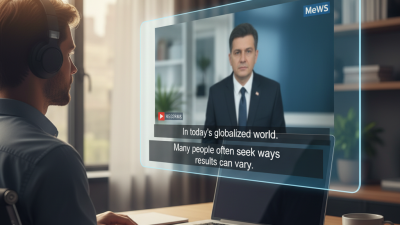
In an increasingly globalized world, the demand to translate audio from video has surged. Many creators aim to reach wider audiences. However, the translation process often poses unique challenges. Accurate translation is essential. Misinterpretations can lead to confusion. Effective tools can help, but they are not always foolproof.
Creative approaches are needed to ensure clarity. Relying solely on automated solutions may not yield the best results. Human oversight is crucial. Sometimes, translations may feel disconnected from the original intent. The nuances of language often get lost in translation, especially with tone and context.
A thoughtful blend of technology and personal touch can enhance the translation process. Experimenting with different methods can lead to better outcomes. Each video is unique, and so is its audio. Finding the right way to translate audio from video requires practice. Reflection on previous results can improve future efforts.

In the digital age, audio translation plays a crucial role in video content. A report by Common Sense Advisory found that 75% of consumers prefer content in their native language. This preference underscores the importance of translating audio to reach a broader audience. Videos with audio translation can enhance viewer engagement and improve retention rates.
Audio translation is not just about language. It involves nuances, culture, and context. A poorly translated audio track can lead to misunderstandings. Studies show that 30% of viewers abandon videos that are not properly localized. This abandonment can significantly impact brand reputation and outreach.
Moreover, as online video consumption grows, effective audio translation can increase market penetration. Global video consumption is expected to reach over 82% of all internet traffic by 2024. Companies are missing out if they don't prioritize this aspect. Creating content that resonates with diverse audiences requires an understanding of linguistic differences. Investing in quality audio translation services is a necessary step, albeit it comes with challenges.
| Method | Description | Pros | Cons |
|---|---|---|---|
| Transcription | Convert audio into written text | Highly accurate for dialogues | Time-consuming |
| Subtitling | Adding text on screen to translate audio | Allows viewers to follow along with audio | Reading may detract from watching |
| Voiceover | Recording a new audio track in another language | Preserves original context and emotion | Can sound unnatural if poorly done |
| Dubbing | Re-recording audio to match the video | Seamless viewer experience | Expensive and time-intensive |
| Machine Translation | Using AI to translate audio | Fast and cost-efficient | May lack accuracy or context |
| Translation Software | Using tools for captioning and translation | User-friendly and accessible | Results may vary depending on the tool |
| Collaborative Translation | Team-based approach to translation | Multiple perspectives enhance quality | Coordination can be complex |
| Cultural Adaptation | Adjusting content for cultural relevance | Enhances audience engagement | May alter original meaning |
| Post-Editing | Editing machine-generated translation | Improves accuracy and context | Requires skilled editors |
| Audiovisual Translation Services | Specialized services for video content translation | Comprehensive approach | Can be more costly |
Translating audio from video can be challenging. One common issue is background noise that obscures dialogue. This makes it hard to capture accurate translations. Users may struggle to isolate speech from other sounds, resulting in incomplete or incorrect translations. To enhance clarity, consider using audio editing tools to minimize distractions. This can lead to better results, yet it might require additional time and skills.
Another challenge is cultural context. Simply translating words isn't enough. Some phrases carry cultural significance that doesn't transfer directly. Without understanding these nuances, translations can feel flat or misaligned. Engaging native speakers can help. They provide insights that enrich translations. However, relying solely on them may limit perspectives. Striking a balance between literal translation and cultural adaptation is key.
Technical issues often arise, too. Different video formats can complicate audio extraction. Users may encounter file compatibility problems. Choosing the right software can mitigate these issues. Yet, the learning curve can be steep for newcomers. Experimenting with different tools is helpful. It may take time, but finding the right solution pays off in the end.
Translating audio from videos can be challenging. However, the right technologies and tools can simplify the process. One effective method is using automated transcription software. These tools convert audio to text rapidly. But, accuracy may vary. You'll still need to review and edit the output.
Machine translation tools are another option. They can quickly translate the text into different languages. However, nuances can often be lost. Don’t rely solely on them. A human translator should refine the final product for the best results. Collaboration between technology and human expertise is vital.
To enhance your audio translation, consider using subtitles. They help convey meaning while providing context. Use text-to-speech technology for voiceovers. These tools can save time but may misinterpret certain phrases. Always check for errors before publishing your video. Testing various methods ensures you find what works best.
Translating audio from video requires more than just converting words. Maintaining the context and tone is crucial. A recent industry report highlights that 75% of viewers prefer content that resonates with their original message. This is why context matters. If the translation lacks the emotional weight of the source material, it can fail to engage the audience.
When translating, subtle nuances can change the meaning. Consider cultural references or idiomatic expressions. For instance, a phrase that is humorous in one language may fall flat in another. This is why some studies show that audience retention drops by 50% if the tone is inappropriate. Translators must be aware of such challenges. Using tools that appreciate the emotional undertones can help bridge the gap.
Moreover, audio quality influences retention. Poor sound can distract viewers, leading to misunderstandings. According to research, 65% of people struggle with audio clarity, impacting how they relate to the content. It's vital to ensure that both translation and audio quality complement each other. A successful translation should seamlessly blend with the video to create a cohesive experience. This requires constant reflection and adjustment from translators.
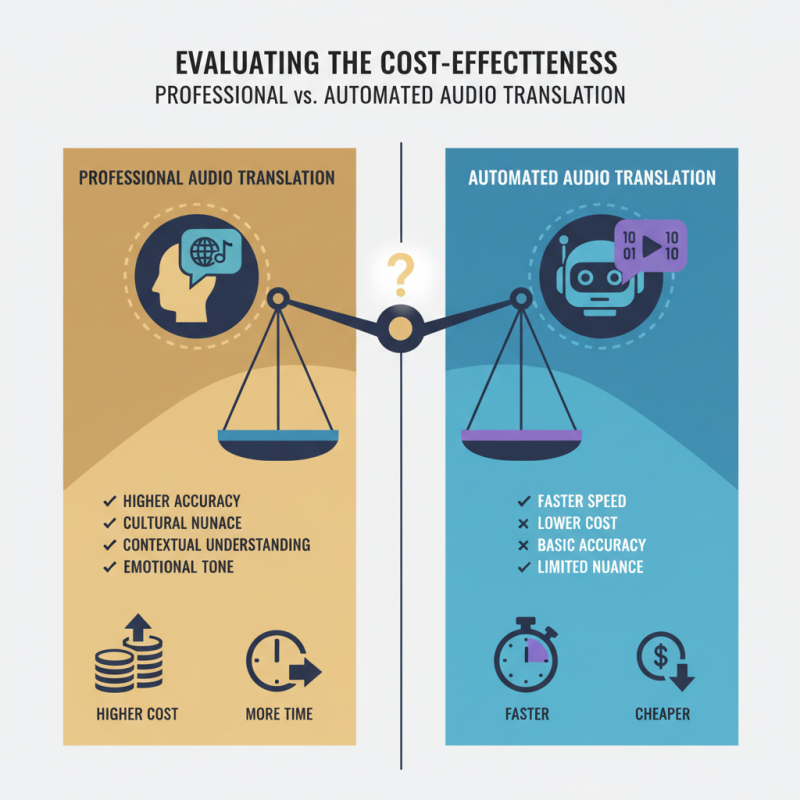
When assessing the cost-effectiveness of professional versus automated audio translation, several factors come into play. Professional services often provide higher accuracy and cultural nuance. Human translators can understand context, idioms, and emotional tones. This ensures that the translation resonates with the target audience. However, these services can be pricey and may require more time.
On the other hand, automated translation tools offer speed and lower costs. They can transcribe and translate audio rapidly, which is ideal for quick projects. But the downside is clear. Automated systems often struggle with dialects and specific terminology. They can produce awkward or unclear translations that may lead to misunderstandings. Evaluating the right choice depends on the project's goals and budget. A small business may lean toward automation for efficiency, while a large enterprise might invest in professional translations for brand integrity.