2026 Top Ways to Translate My Video for Global Audiences?
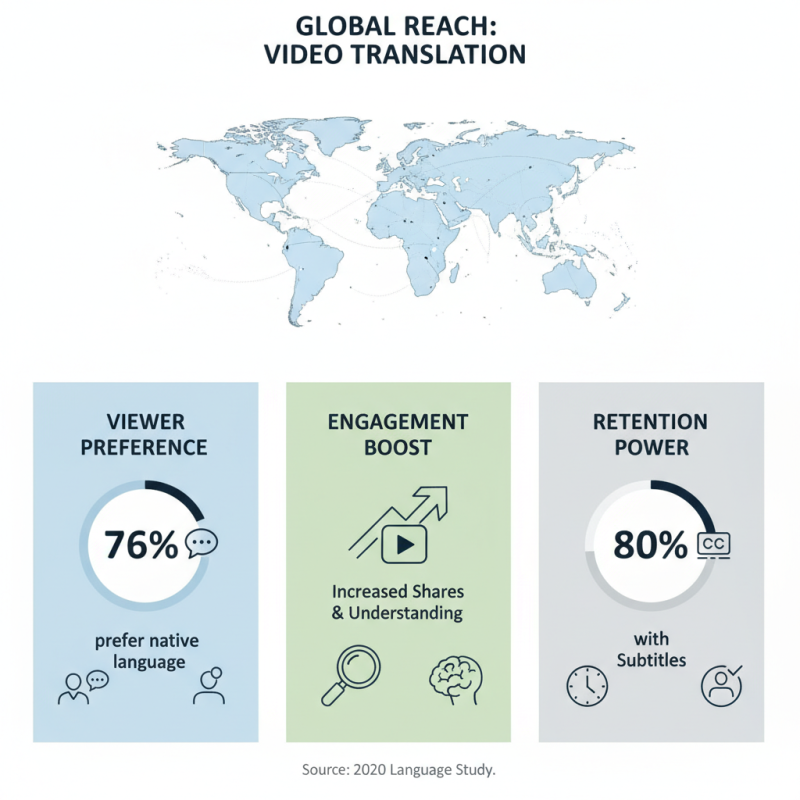
In an increasingly interconnected world, the demand to "translate my video" for global audiences is more pressing than ever. According to a report by Common Sense Advisory, 76% of consumers prefer to watch videos in their native language. This highlights the necessity for businesses to consider multilingual video content. However, many companies overlook this critical aspect. They assume subtitles alone will suffice, but this often falls short.
Effective video translation goes beyond mere text conversion. It requires cultural adaptation and contextual relevance. For instance, a marketing video that works in one region may not resonate in another due to cultural differences. This raises a challenge for video creators. They must reflect on their approach and understand that a one-size-fits-all strategy is ineffective.
Investing in professional translation services can enhance viewer engagement. A study shows that translated videos can increase viewer retention by 80%. Yet, many creators hesitate to allocate budget for this. Ultimately, the road to successful global reach is paved with thoughtful video translation strategies. Companies must ask themselves: Is our content genuinely accessible to all?
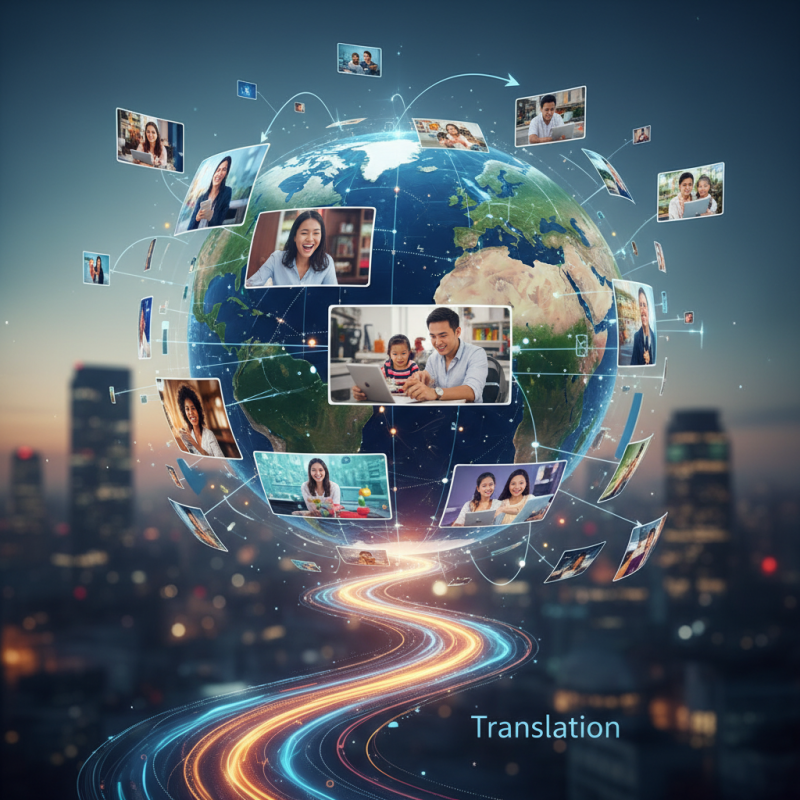
Understanding the Importance of Video Translation for Global Reach
Video translation is crucial for reaching global audiences. A 2020 study revealed that 76% of viewers prefer video content in their native language. This preference highlights the importance of video translation as it significantly enhances viewer engagement. When people understand the content completely, they are more likely to share it. Studies show that videos with subtitles can increase viewer retention by 80%. This statistic underscores the power of effectively translating videos for diverse audiences.
Tips: Always consider cultural nuances. Each market has its language subtleties. Direct translations may miss the mark. For example, humor often does not translate well across cultures. Make sure to adapt jokes to the target audience's context.
Furthermore, translation improves search engine optimization (SEO). Using translated keywords can enhance discoverability in local markets. A report from a digital marketing agency indicated that localized video content can boost organic traffic by up to 50%. However, remember that automated translations may lack the necessary emotional depth. Human translators can provide context and empathy, making the content resonate better with local viewers.
Identifying Target Audiences and Their Language Preferences
In today's global landscape, identifying target audiences becomes crucial for video content creators. Understanding language preferences can enhance viewers' engagement. Different regions have unique cultures and dialects. For instance, a video targeting Spanish speakers might require subtle adjustments based on whether the audience is from Spain or Latin America.
Research plays a significant role in this process. Analyzing viewer demographics and their language nuances can be challenging. You might discover that a large segment prefers subtitles over dubbed audio, or vice versa. Some communities may favor more colloquial language, while others appreciate formal tones. These preferences can greatly impact how your message is received.
Testing your content is essential. Experiment with various translations and gather feedback. Observations may reveal that not all jokes or references translate well. This reflection can enhance your overall video strategy. It is important to stay adaptable and responsive to audience reactions. Consider that what resonates with one culture may not work with another. Embracing these complexities can lead to stronger connections with diverse audiences.
2026 Top Ways to Translate My Video for Global Audiences
| Strategy |
Description |
Target Audience |
Language Preferences |
Estimated Impact (%) |
| Subtitling |
Adding translated subtitles to videos |
Global audience with diverse language backgrounds |
English, Spanish, Mandarin |
70 |
| Voiceover |
Using voice actors to provide translated audio |
Modern audiences preferring audio content |
French, German, Japanese |
85 |
| Localization |
Adapting content to fit cultural nuances |
Specific regions with unique cultural contexts |
Brazilian Portuguese, Indian English |
75 |
| Transcription |
Creating written text of the spoken content |
Education and accessibility-focused audiences |
English, Arabic, Russian |
60 |
| Machine Translation |
Using AI tools to translate video content |
Tech-savvy users looking for quick solutions |
Multiple languages, quick adaptation needed |
50 |
Exploring Translation Technologies and Tools for Video Content
Video content has become essential for reaching global audiences. Yet, translation remains a complex challenge. Various translation technologies and tools can help streamline this process. AI-powered software can generate subtitles quickly. However, the nuances of language often get lost in translation. Contextual meaning and cultural references may not always transfer effectively.
Machine translation is another option. It is fast and cost-effective, but errors can occur. Sometimes it fails to capture emotion or intent. Users may find that human input is still necessary for accurate interpretation. Professional services can provide a more polished and localized version of video content. Yet, they can be expensive and time-consuming.
Choosing the right method requires careful consideration. Each tool has its strengths and weaknesses. Automated solutions may work well for simple content. More complex materials, however, often benefit from professional translators. Businesses should weigh their needs against the capabilities of each tool. Ultimately, effective translation enhances viewer engagement in diverse markets. This is crucial for global success.
Strategies for Professional Voiceover and Subtitling Services
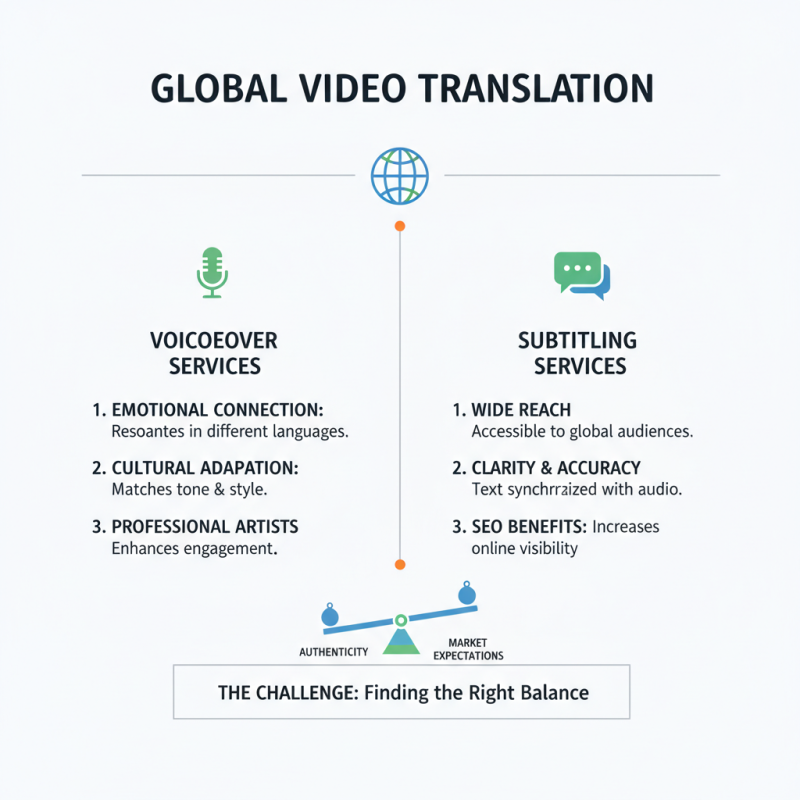
When translating videos for a global audience, professional voiceover and subtitling services are essential. Voiceovers allow your message to resonate in different languages. It enables viewers to connect with the content more deeply. Hiring skilled voiceover artists can enhance emotional engagement. Yet, finding the right voice can be challenging. Each culture has distinct preferences for tone and style. Sometimes, it feels like a balancing act between authenticity and market expectations.
Subtitling also plays a crucial role. It's not just about translating words; it's about context. Subtitles must match the pacing of speech and convey the intended emotions. Poorly timed subtitles can lead to viewer frustration. Translators must be attentive to cultural references too; what makes sense in one language may not in another. Mistakes can alienate audiences, so it’s vital to seek feedback from native speakers during the process.
Moreover, some content simply doesn’t translate well. Humor, idioms, or slang can lose their punch. Occasionally, adjustments are necessary, but are they worth it? Striking a balance between literal translation and the spirit of the original can be tricky. Organizations should invest the time to refine their strategies. Global audiences deserve content that speaks to them genuinely, after all. The process might not be perfect, yet each step can lead to a deeper understanding of diverse cultures.
Measuring the Impact of Translated Videos on Engagement and Reach
Translating videos can significantly impact engagement and audience reach. A study revealed that 76% of viewers prefer watching content in their native language. This preference boosts their willingness to engage with the brand. Research also shows that videos with subtitles can increase view time by up to 40%. This statistic emphasizes the importance of language accessibility in video content.
However, not all translated videos perform equally well. Cultural nuances and context can be lost in translation. According to a report, 53% of consumers mentioned that poorly translated content could harm their perception of the brand. It's essential to invest in quality translations that resonate with the audience. User-generated content often succeeds because it reflects authentic voices.
Even with these strategies, challenges remain. Maintaining engagement while accurately translating can be tricky. A recent survey noted that only 30% of brands track the performance of their translated content. Many might not analyze the effects on engagement metrics. This lack of analysis can lead to missed opportunities for optimization. Observing view counts and audience feedback could offer valuable insights.
Impact of Translated Videos on Engagement and Reach