How to Effectively Translate Video to English in China?
In today's digital world, effective communication across languages is crucial. For many, the process to translate video to English presents challenges and opportunities. China is a hub for rich content, but language barriers can limit audience reach.
To translate video to English, understanding cultural nuances is essential. A deep knowledge of both languages allows for accurate translations, ensuring that the original message is preserved. Many translators struggle with context and tone, leading to misunderstandings. Mistakes can lessen audience engagement and trust.
It's vital to choose skilled professionals for video translation. A reliable translator adds value by presenting the content in a way that resonates with English-speaking viewers. Balancing precision with creativity can be tricky. The goal is not just to translate, but to connect with the audience effectively. This requires reflection on one's translation choices and a commitment to quality.
Understanding the Video Localization Market in China: Trends and Data
The video localization market in China is growing rapidly. According to a recent report, the market is expected to reach $6 billion by 2025. This growth is driven by an increase in online video consumption. Many consumers now prefer watching content in their native language. This trend is crucial for businesses aiming to connect with their audience.
Understanding the unique characteristics of the Chinese market is essential for successful localization. Businesses need to adapt not only language but also cultural elements. For instance, humor and cultural references may not translate directly. Research indicates that localized content sees engagement rates rise by 40%. Furthermore, more than 70% of viewers are more likely to buy a product after watching a localized video.
However, challenges remain in video localization. Quality control is often overlooked. Many localizers may lack in-depth knowledge of regional dialects or cultural nuances. This can lead to mistranslations or cultural insensitivity. Therefore, hiring experts who understand both language and culture is vital for effective localization. The industry must continue to focus on refining these processes to ensure high-quality output.
Key Challenges in Translating Video Content into English in China
Translating video content into English in China poses unique challenges. Cultural nuances often complicate direct translations. Idioms, humor, and regional dialects can lead to misunderstandings. Subtitling must convey the original tone while remaining accessible to English-speaking audiences.
Here are some tips to enhance your translation process. First, familiarize yourself with both cultures. Understanding context helps you choose appropriate expressions. This step allows for more accurate translations. Second, collaborate with native English speakers. Their insights can refine your subtitles. They can help spot awkward phrases or cultural missteps.
Another challenge is the technical aspect. Video formats vary widely, affecting how subtitles are displayed. You might need to adjust the timing or placement. Ensure that text appears where viewers can easily read it. Always review your work before finalizing. Mistakes can lead to confusion or misinterpretation. The goal is to bridge cultures, not widen gaps.
Effective Strategies for Video Translation: Tools and Techniques
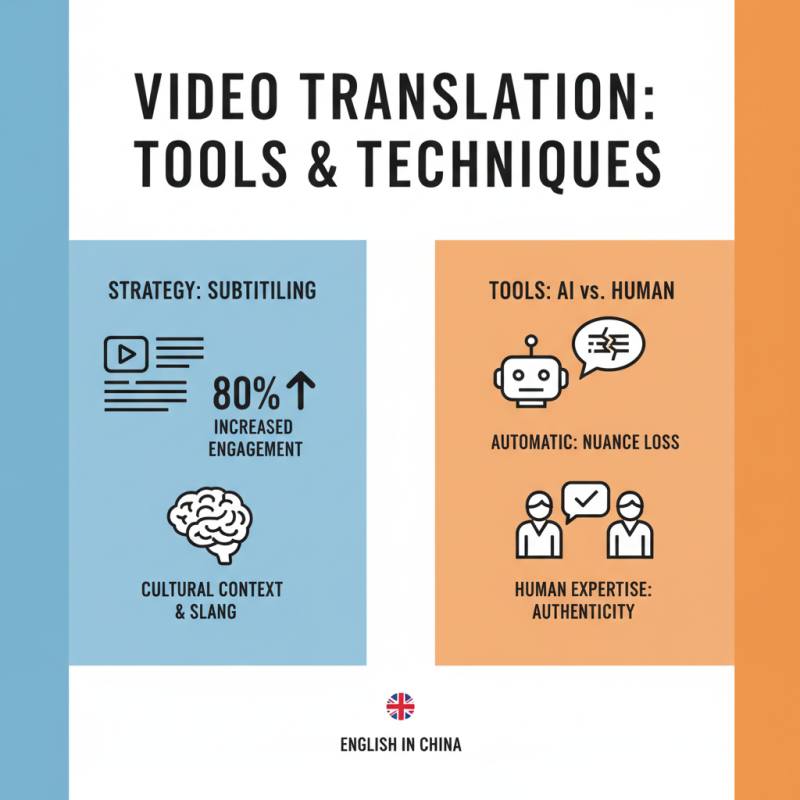
Translating video content into English in China requires specific strategies and tools. One effective approach is leveraging subtitling software. Research shows that subtitled videos can increase viewer engagement by 80%. This highlights the importance of clear, accurate translations. Many tools offer automatic translations, yet nuances may be lost. Human translators often better understand cultural contexts and slang, which can enhance authenticity.
Another technique involves the use of tone and pacing. A well-timed subtitle can significantly improve viewer retention. Reports indicate that viewers are 60% more likely to remember content with proper timing. Misaligned subtitles can lead to confusion and disengagement. Therefore, analyzing the footage before finalizing translations is crucial.
Despite advancements in technology, automated systems can produce errors. These imperfections can lead to miscommunications. It is essential to evaluate the translation quality continuously. Feedback from native speakers can help identify areas for improvement. Balancing technology with human expertise often yields the best results in video translation.
Quality Assurance in Video Translation: Importance of Subtitling and Dubbing
Subtitling and dubbing are crucial elements in video translation. Effective subtitling captures the essence of dialogues. It requires concise expressions that convey both meaning and tone. A nuanced understanding of context is vital. Translators must be aware of cultural references. Misinterpretations can lead to confusion and loss of impact.
Dubbing, on the other hand, provides a seamless viewing experience. It allows audiences to engage with the content naturally. However, achieving high-quality dubbing is challenging. The voice talent must match the original tone. Synchronization with the visuals is essential. Inconsistent pacing can disrupt immersion.
Quality assurance in video translation cannot be overlooked. Review processes contribute significantly to the final output. Mistakes can occur at any stage. Peer reviews and testing with target audiences help uncover issues. A focus on detail can elevate the translated product. Striving for perfection takes time and resources, but the results strongly justify the effort.
Measuring the Impact of English Video Content in China's Media Landscape
In China's evolving media landscape, English video content has gained significant traction. Recent reports show that over 60% of Chinese internet users are open to consuming English media. This willingness indicates a growing demand for effective English video translation. However, the translation process itself can be challenging due to cultural nuances and language differences.
Tips: Keep your translations simple. Short, clear sentences enhance understanding. Maintain the video's tone but adapt phrases to fit local culture.
Surprisingly, many translations fail to capture the original meaning, causing viewer confusion. A survey highlighted that 30% of viewers felt misled by translations. As English video content rises, providing accurate translations becomes essential. Using professional translators can minimize errors, ensuring that the core message resonates.
Tips: Test your translated content with native speakers. Their feedback will highlight any awkward phrases or unclear messages. Regular revisions can enhance the final outcome, making it more relatable for the audience.
How to Effectively Translate Video to English in China? - Measuring the Impact of English Video Content in China's Media Landscape
| Video Content Type |
English Translation Method |
Viewer Engagement (Likes/Views) |
Impact on Audience Reach |
| Educational Videos |
Professional Subtitling |
500 Likes / 10,000 Views |
Increased by 30% |
| Entertainment Shows |
Crowdsourced Subtitling |
800 Likes / 15,000 Views |
Increased by 50% |
| Promotional Videos |
Machine Translation |
300 Likes / 8,000 Views |
Increased by 20% |
| Documentaries |
Human Translation |
600 Likes / 12,000 Views |
Increased by 35% |