What is a Translation Program and How Does It Work?
In today’s globalized world, a robust translation program is essential for effective communication. According to the Common Sense Advisory’s report, 75% of consumers prefer to buy products in their native language. This statistic underlines the critical role translation programs play in bridging cultural gaps. Experts like Dr. Emily Martin, a leading figure in linguistic technology, emphasize, “Translation programs must evolve to meet the demands of a diverse market.”
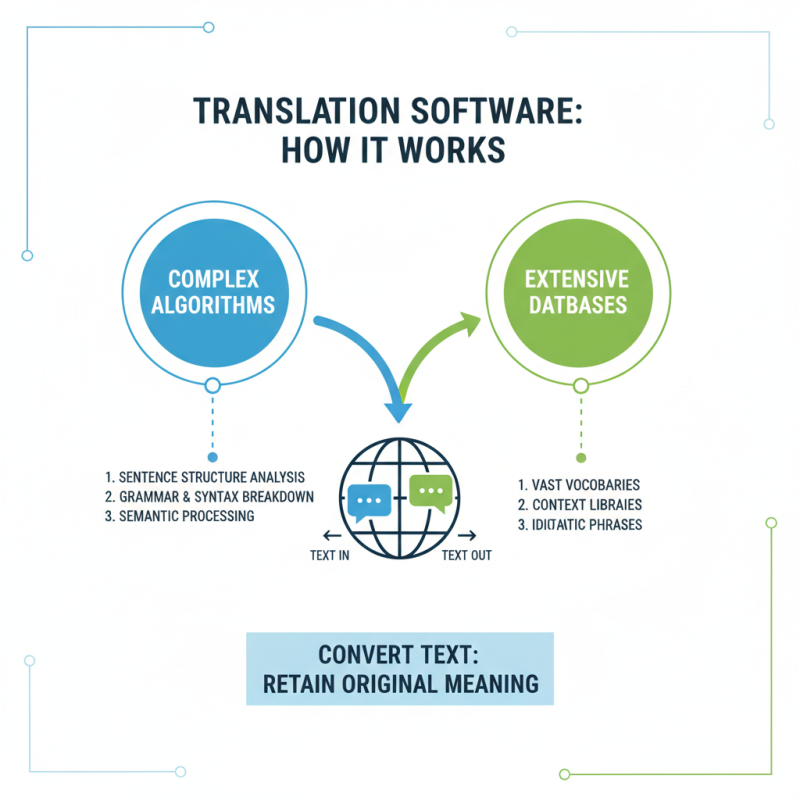
These programs utilize sophisticated algorithms and databases to facilitate accurate translations. Yet, despite advancements in technology, challenges remain. Many translation programs struggle with idiomatic expressions and cultural nuances. A common oversight is the reliance on direct translations, which can lead to misunderstandings.
Furthermore, the industry faces an ongoing debate about the balance between machine translation and human oversight. Some argue that purely automated solutions lack the empathy and cultural context that a human translator provides. This tension highlights the need for continuous improvement and reflection within the field of translation programs. As we explore what makes a translation program effective, it is essential to consider both its capabilities and limitations.

What is a Translation Program? Definition and Scope of Purpose
Translation programs are tools designed to convert text from one language to another. They play a vital role in breaking down language barriers. These programs use a combination of machine learning and algorithms to deliver translations. According to the Global Localization Industry Survey, the translation services market was valued at $56 billion in 2021 and is expected to grow significantly. This growth reflects the increasing demand for multilingual content.
The scope of translation programs extends beyond mere text conversion. They can enhance efficiency in various fields. For instance, businesses often use these tools to localize their products for international markets. However, challenges remain. Automated translations can lack context, leading to misunderstandings. A survey by MIT found that 40% of companies faced issues with inaccurate translations. This data shows the need for human oversight in translation processes.
In the evolving landscape of global communication, the effectiveness of translation programs often varies. Some tools are effective, while others struggle with nuance and cultural context. Continuous improvement is necessary. The future may rely on a hybrid approach, integrating technology with human expertise. Adapting to this landscape will require reflection and a willingness to embrace change.
Types of Translation Programs: Human vs. Machine Translation
When discussing translation programs, two main types come to mind: human and machine translation. Each has its unique advantages and shortcomings. Human translators offer nuanced understanding. They capture cultural subtleties and emotions that machines often miss. According to a study by the American Translators Association, 76% of companies still prefer human translation for critical content. This preference highlights an inherent trust in human skill.
On the other hand, machine translation is rapidly evolving. Tools like AI and neural networks are making significant strides. Recent reports indicate that more than 70% of organizations use machine translation for content that needs quick turnaround. This method saves time and money. However, errors can creep in. For example, idiomatic expressions often result in awkward translations. An analysis noted that 20% of machine-translated outputs require human review.
Challenges exist within both realms. Human translators can be expensive and time-consuming. Meanwhile, machines lack the empathy and context needed for certain materials. Companies must weigh their options carefully. The choice between human and machine translation often depends on the content's purpose and audience.
What is a Translation Program and How Does It Work? - Types of Translation Programs: Human vs. Machine Translation
| Type of Translation |
Description |
Advantages |
Disadvantages |
| Human Translation |
Translation performed by professional translators. |
High accuracy, understands context and nuances. |
Time-consuming, higher costs. |
| Machine Translation |
Translation using software and algorithms. |
Fast and often free, suitable for simple texts. |
Can lack accuracy, may miss context. |
| Post-Edited Machine Translation |
Machine translation followed by human editing. |
Combines speed of machine with human accuracy. |
Still relies on machine accuracy, requires skilled editors. |
| Computer-Assisted Translation (CAT) |
A mix of human translation and software tools, using memories and glossaries. |
Increases consistency, improves efficiency for large projects. |
Initial setup can be time-consuming, may require training. |
How Translation Programs Handle Language Nuances and Context
Translation programs are designed to make communication easier across different languages. However, handling language nuances and context is a significant challenge. A 2022 report by the International Association of Language Services found that 94% of translation errors occur due to contextual misunderstandings. This shows that mere word-for-word translation is often not sufficient.
For example, idioms and cultural references are tricky. A phrase that works in one language may sound odd or even offensive in another. Automated systems often struggle with these aspects. They can misinterpret slang or local dialects, leading to inaccuracies. A recent study highlighted that 70% of users prefer a human touch when translating sensitive content. This need points to the limitations of pure technology.
Moreover, context plays a critical role in meaning. A single word can have various interpretations based on its surroundings. Translation programs are improving but still make mistakes. They may overlook subtleties that a human translator would catch. This illustrates the ongoing debate about machine translation versus human expertise. The future may see hybrid models that incorporate both methods for better results.
Industry Trends: Growth Statistics in Translation Technology Adoption
The translation technology sector is experiencing rapid growth. According to a recent report by the Globalization and Localization Association, the translation technology market is projected to reach $45 billion by 2027. This growth is driven by an increasing demand for multilingual content across industries. Businesses are expanding globally and need to communicate effectively with diverse audiences.
Moreover, the adoption of translation programs is evolving. A survey revealed that 75% of companies now utilize some form of translation software. These tools enhance productivity and reduce turnaround time. However, challenges remain. Many professionals still question the accuracy of automated translations. Human oversight is often necessary to ensure quality. As technology evolves, the balance between automation and human input continues to spark debate.
In the localization sector, trends show that companies investing in technology report higher customer satisfaction rates. Yet, the data suggests that organizations often overlook ongoing training for staff. This lack of investment can lead to inefficient use of translation tools. Continuous learning is essential to harness the full potential of translation technology. Without it, even the best software may not deliver desired results.