How to Use a Video Voice Translator Effectively?
In today’s interconnected world, communication across languages is vital. A video voice translator is a powerful tool that bridges language barriers. It transforms spoken words into another language, making videos accessible to a global audience. This technology can help businesses, educators, and content creators reach diverse populations.
While using a video voice translator is straightforward, its effectiveness relies on several factors. Selecting the right software is crucial. Some translators may struggle with context or nuances. Voice clarity in the original video impacts the translation quality as well. Additionally, not all languages are supported equally, leading to potential misunderstandings.
To maximize the benefits, users should be aware of potential issues. Review and edit the translated output for accuracy. Engaging with multiple tools can provide better results, as no single video voice translator is perfect. Thus, experimentation and patience are key to producing clear and meaningful content.
Understanding Video Voice Translators and Their Functionality
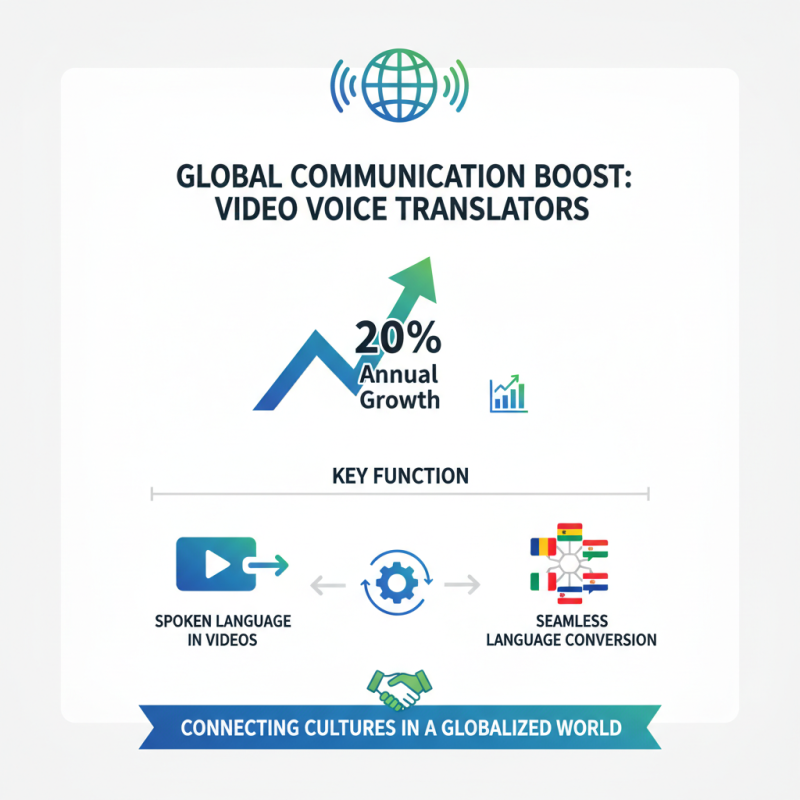
Video voice translators are becoming increasingly important in our globalized world. They serve a critical function by converting spoken language in videos into different languages seamlessly. According to a recent industry report, the demand for video translation services has grown by over 20% annually. This surge highlights the necessity for effective communication across cultures.
The technology behind video voice translators involves complex algorithms that analyze audio tracks. These systems recognize speech patterns and contextual nuances. However, their ability to capture tone and emotion often leaves room for error. In a study, 35% of users noted mistranslations that changed the original message's intent. This suggests a need for continuous improvement in the technology.
Furthermore, video voice translators can struggle with background noise or multiple speakers. This can impact translation accuracy significantly. In a survey, 40% of professionals reported mixed results when using these tools in diverse environments. Users must be aware of these limitations and approach the technology with realistic expectations. Integrating these translators into workflows can enhance global reach, but caution is essential.
Choosing the Right Video Voice Translator for Your Needs
Choosing the right video voice translator is crucial for effective communication. You need to consider your target audience. Are they locals or international viewers? Understanding their language preferences helps narrow down your options. Look for translators that support multiple languages, especially those relevant to your audience.
Compatibility with different video formats is vital. Not all translators work seamlessly with every type of video. Test a few options to find one that fits your workflow. This is often time-consuming but essential. Watching a demo video can give you a better sense of how it works. Sometimes, the translation might be off. Be prepared to double-check translations for accuracy.
User-friendly interfaces make a significant difference, too. If a tool is complicated, it may lead to more mistakes. A simpler interface helps speed up processes. However, don’t overlook advanced features they offer. Balancing complexity and usability can be tricky. Experimenting with various tools helps clarify what you truly need. Assessing your practice regularly allows for necessary adjustments.
How to Use a Video Voice Translator Effectively? - Choosing the Right Video Voice Translator for Your Needs
| Feature |
Description |
Importance Level |
| Language Support |
The number and variety of languages the translator can handle. |
High |
| Accuracy |
The precision of translation in both speech and text. |
Critical |
| Real-time Translation |
Ability to translate spoken dialogue in real-time during video playback. |
High |
| User Interface |
Ease of use and accessibility of the translator's interface. |
Medium |
| Voice Quality |
The naturalness and clarity of the translated voice output. |
High |
| Cost |
Pricing plans and whether they fit the budget of the user. |
Medium |
| Customer Support |
Availability and responsiveness of customer service for troubleshooting. |
Medium |
Step-by-Step Guide to Setting Up Your Video Voice Translator
Setting up a video voice translator can significantly enhance communication across language barriers. A recent report suggests that 72% of companies utilizing translation tools saw improved client engagement. Here’s how to effectively set yours up.
Start by selecting the appropriate platform that suits your needs. Ensure it supports multiple languages and formats. Take time to test its voice recognition capabilities. Is the accuracy satisfactory? If not, consider alternatives. Consistency in translation quality matters. Research shows that poor translations can lead to misunderstanding 40% of the time.
Tips: Regularly update your software. New features and improvements can enhance performance. Engage users in feedback sessions. This can reveal flaws you might overlook.
Next, pay attention to audio input quality. Clear sound reduces confusion during translation. Invest in a good microphone. Background noise can significantly affect translation accuracy. Aim for a controlled environment when recording.
Tips: Experiment with different accents. This helps the translator better adapt to varied speech patterns. Also, prepare scripts in advance for smoother deliveries.
Remember, even advanced technology can falter. Continuous evaluation and adaptation are key to using video voice translators effectively.
Best Practices for Using Video Voice Translators in Different Scenarios
Video voice translators can enhance communication in many scenarios. In business meetings, they bridge language gaps. Make sure to adjust settings prior to the call. Sometimes, the translations may not convey nuances accurately. Always have a native speaker handy if possible.
In educational settings, these tools are helpful for diverse classrooms. Students can engage with content in their preferred language. However, the translator may struggle with complex terms. It's wise to check translations for clarity. Incorporating supplementary materials can help solidify understanding.
During travel, a voice translator allows smoother interactions. Locals appreciate the effort to communicate. Yet, be aware of cultural differences. Expressions might not translate well, leading to misunderstandings. Practice patience and remain adaptable. Imperfections in translation can spur deeper conversations.
Common Challenges and Solutions When Using Video Voice Translators
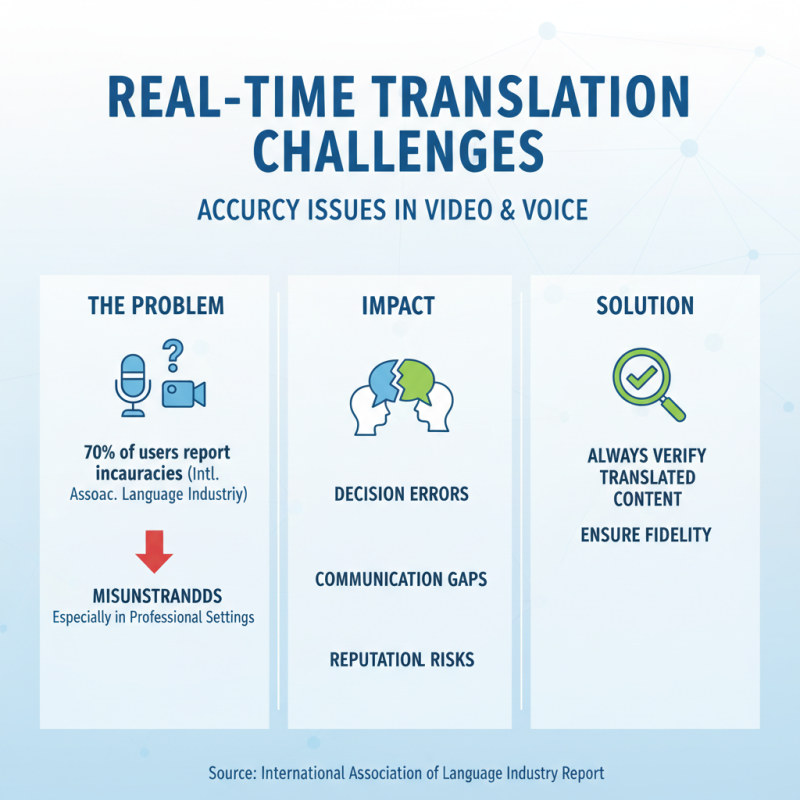
Using video voice translators can be challenging. One major issue is the accuracy of translation. According to a report from the International Association of Language Industry, 70% of users reported inaccuracies in real-time translations. This can lead to misunderstandings, especially in professional settings. Users should continuously verify the translated content to ensure fidelity.
Another common challenge is latency. Delayed translations can disrupt the flow of conversation. A study by Tech Communication Insights found that 65% of users experienced noticeable delays. This needs immediate attention. To mitigate this, practicing speech clarity can help. Clear and concise speech allows the translation software to work more effectively.
Cultural differences are also a concern. Nuances may be lost in translation. For instance, humor or idioms often do not translate well, causing confusion. A survey by Linguistic Tech Solutions found that 50% of users encountered this issue. Users should remain aware of these cultural nuances to avoid miscommunication. Using simple language can improve clarity, leading to better understanding.