What is a Video Voice Translator and How Does It Work?
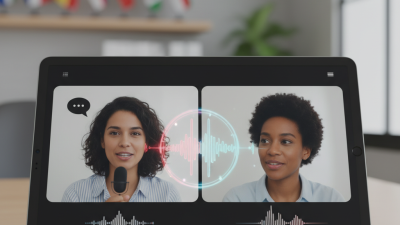
In today's globalized world, communication has never been more vital. A video voice translator serves as a key tool in bridging language barriers. This technology allows users to translate spoken words in real-time during video calls and interactions, fostering better understanding. Imagine connecting with someone across the globe, yet feeling the distance fade away.
The mechanics of a video voice translator are intriguing. It utilizes advanced algorithms to interpret spoken language instantly. This transformation occurs on the spot, allowing for seamless conversations. However, the effectiveness can vary. Different accents and dialects may confuse the system.
While this tool is valuable, challenges remain. Users may encounter inaccuracies or delays in translation. These imperfections can lead to misunderstandings. Reflecting on these flaws is crucial for improving the technology. Ultimately, the video voice translator has the potential to revolutionize communication, but ongoing refinement is necessary.

What is a Video Voice Translator?
A video voice translator is a cutting-edge tool designed to facilitate communication across different languages. It uses advanced algorithms to convert spoken words in a video from one language to another. This technology is increasingly relevant in our globalized world, where the demand for content translation is surging. According to industry reports, the video translation market is projected to reach $30 billion by 2027, reflecting the growing need for accessibility and understanding.
These translators utilize artificial intelligence and machine learning for accurate voice recognition and translation. An example can be seen in their application during international conferences. Speakers can present in their native language while audiences receive immediate translations.
However, challenges remain. The technology may struggle with accents or background noise. There are distinct limitations when conveying cultural nuances. Misinterpretations can occur, affecting the message's intent.
Recent findings show that about 40% of translators feel pressure to ensure cultural accuracy. While video voice translators make communication easier, their imperfections remind us that technology cannot replace human understanding completely. Balancing speed and accuracy is crucial for users reliant on these tools. As video content continues to proliferate, the demand for effective translation will only increase.
How Does a Video Voice Translator Function?
A video voice translator operates by converting spoken language in videos into another language. This technology relies on voice recognition and translation algorithms. First, it captures audio from the video. Then, it identifies the spoken words and translates them. The result is a new audio track with the translated speech.
The functionality of this tool involves multiple steps. Users upload a video file or provide a video link. Next, the software analyzes the audio. It extracts voice patterns and recognizes the language. After translating, it synthesizes speech in the target language. This process often occurs in real-time, enabling seamless communication.
However, there are challenges. Accents and dialects can affect accuracy. Background noise can interfere with recognition. Sometimes, the tone of the translation may not convey the same emotion as the original. This is a reminder that technology, while powerful, is not perfect. Users might experience frustrations when translations do not capture nuances fully.
What is a Video Voice Translator and How Does It Work?
| Feature |
Description |
Applications |
Technologies Used |
| Real-time Translation |
Translates spoken language into target language during video playback. |
International conferences, webinars, online courses. |
Machine learning, speech recognition, neural networks. |
| Subtitling |
Generates subtitles in the target language that sync with the audio. |
Movies, educational videos, social media content. |
Natural Language Processing, AI algorithms. |
| Voice Cloning |
Creates a synthetic voice that mimics the original speaker’s tone. |
Video games, animated films, simulations. |
Deep learning, text-to-speech technology. |
| Cross-Platform Compatibility |
Supports multiple devices and operating systems for seamless use. |
Mobile apps, desktop software, web platforms. |
Cloud computing, API integration. |
| User-Friendly Interface |
Simple controls for users to easily manage translation settings. |
Educational tools, entertainment platforms. |
Web design, UX/UI principles. |
Key Technologies Behind Video Voice Translation
A video voice translator is a technology that converts spoken language in videos into another spoken language. It employs several key technologies to achieve this. Automatic speech recognition (ASR) transcribes the spoken words into text. This text is then translated using machine translation (MT). Finally, text-to-speech (TTS) generates the audio in the desired language.
These technologies work together, but they aren't perfect. ASR can struggle with accents or overlapping speech. This often leads to errors in transcription. Machine translation may not capture the nuances of the original dialogue. The translated text can sound awkward or unnatural, lacking the original's flow.
Tips: It’s important to review the output. Sometimes, nuances in humor or culture get lost. Consider editing the translated text before finalizing. Test the audio quality to ensure clarity. A little extra work can enhance the viewer's experience significantly. Rely on feedback to improve translations over time. Continuous learning is essential in improving these technologies.
Applications and Use Cases of Video Voice Translators
Video voice translators have gained popularity across various sectors. Their applications range from education to entertainment. In classrooms, these tools help bridge language gaps. According to a report by ResearchAndMarkets, the global market for language translation services is expected to reach $56 billion by 2027. That's significant growth, reflecting high demand for effective communication.
In business meetings, video voice translators enable real-time conversations. This fosters collaboration among multinational teams. Video conferencing platforms now often include translation features. Users report a smoother experience when dealing with language barriers. Yet, reliance on technology can lead to misunderstandings. Nuances and cultural context are sometimes overlooked.
**Tip:** Always pair technology with human oversight. Language is complex, and a translator might miss key elements. In creative fields, subtleties matter. Working with a human translator alongside video tools can enhance understanding.
In entertainment, these translators can localize content for global audiences. Subtitled videos are common, yet voice translation offers a new level of engagement. However, automated systems may struggle with humor or idioms. Users should be aware of limitations in certain contexts. Even as technology improves, critical evaluation remains essential.
Usage Statistics of Video Voice Translators (2023)
Benefits and Limitations of Using Video Voice Translators
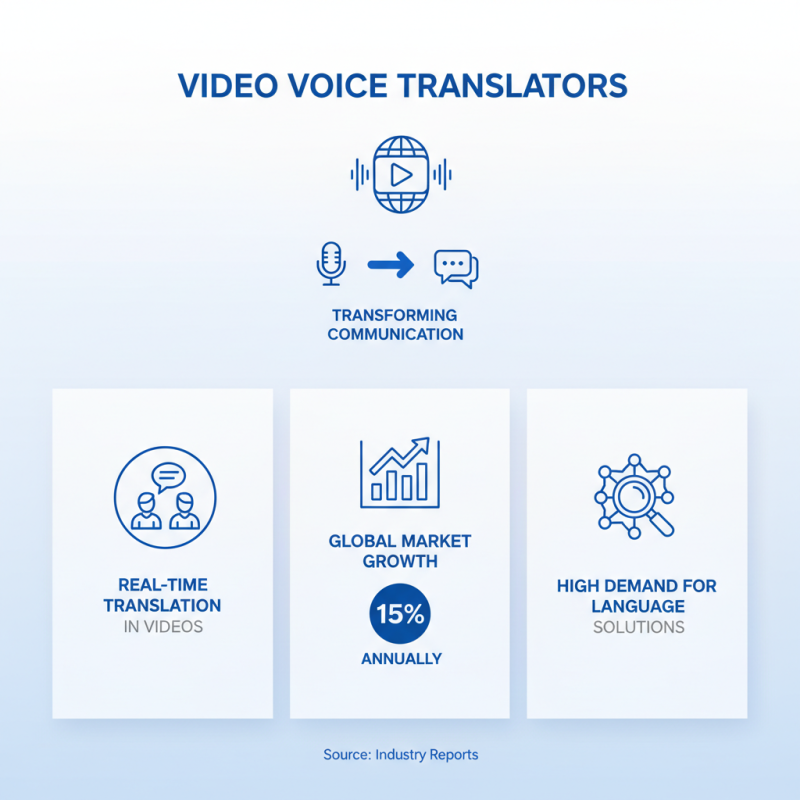
Video voice translators are transforming communication. They facilitate real-time translation in videos. According to industry reports, the global market for video translation technology is expected to grow 15% annually. This growth highlights demand for effective language solutions.
However, there are limitations. Accuracy can vary significantly. Misinterpretations can lead to confusion, especially in nuanced discussions. The technology struggles with idiomatic expressions or cultural references. Users often need to double-check translations for accuracy. This can be frustrating and time-consuming.
Additionally, voice synthesis quality can affect the viewer experience. Poor audio can distract from the content. A report from a language research organization noted that around 30% of users expressed dissatisfaction with synthetic voices. The human touch is still essential for engaging communication. Video voice translators have potential, but improvement is necessary.