Why Use Translation Software for Global Sourcing?

Global sourcing depends on clear communication across languages, time zones, and business cultures. A supplier’s quotation may include technical terms, delivery conditions, or quality requirements that seem simple but carry serious meaning. One mistranslated unit can affect an entire purchase order. Translation software helps procurement teams review emails, product specifications, inspection notes, and supplier contracts more quickly. It can also support consistent terminology across factories, distributors, and internal departments. This is especially useful when a sourcing team compares several suppliers during a short buying window. Faster understanding can reduce delays and help teams ask better questions before placing an order.

Speed is not accuracy by itself. Human review still matters. A professional buyer should check measurements, industry terms, warranty language, and culturally sensitive expressions. Software may misunderstand a product name or translate a polite refusal as agreement. That mistake can be costly. A practical workflow combines translation software with approved glossaries, bilingual review, and documented supplier communication. Teams should also consider access controls when handling pricing, designs, or customer information. The strongest results come from treating the tool as a capable assistant, not an unquestionable authority. It saves time, but it cannot replace judgment. That limitation deserves attention. With careful oversight, translation software can make global sourcing more reliable, transparent, and easier to manage.

Why Use Translation Software for Global Sourcing?

Understanding Translation Software in Global Sourcing

Understanding translation software is essential in global sourcing. It converts supplier emails, product specifications, contracts, and inspection notes into working languages. Modern systems can translate large document batches within minutes. They also support terminology lists, translation memories, and machine-learning suggestions.

The business case is measurable. CSA Research reported in its 2020 study of 8,709 consumers across 29 countries that 76% preferred product information in their native language. The same study found that 40% would not buy from websites in other languages. For sourcing teams, unclear wording can create incorrect quantities, missed compliance details, or costly sampling delays. Translation software reduces these risks, but it does not remove them. Technical terms still need human review. A word describing fabric strength may be translated correctly in one document and poorly in another. That inconsistency is easy to miss.

Tips: Build a controlled glossary before contacting suppliers. Include material names, measurements, packaging terms, and quality standards. Ask a bilingual reviewer to check high-risk content, especially payment terms and specifications. Keep the original text beside the translation. This simple habit exposes missing details. It also creates an audit trail.

Use software for speed, not blind trust. The European Language Industry Survey has repeatedly identified machine translation and automation as major industry trends, yet professional workflows still depend on editing and quality checks. A practical process combines automated drafts, supplier confirmation, and human approval before production begins. Mistakes remain possible. That is the part worth questioning.
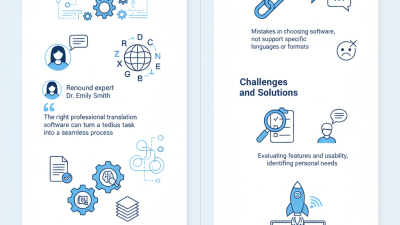

Key Communication Challenges in International Procurement

Why Use Translation Software for Global Sourcing?

International procurement rarely breaks down because of price alone. A vague specification, missed tone, or unclear delivery term can create expensive delays. In a factory discussion, “sample approval by Friday” may sound firm to one team and flexible to another. Translation software helps teams exchange purchase orders, inspection notes, and technical questions faster. It also keeps repeated terms consistent across emails and documents.

Small details matter. A measurement such as 0.2 millimeters can lose its decimal point during manual translation. A carton instruction may also become unclear after several language handoffs. Good translation software can recognize technical vocabulary, preserve numbers, and flag inconsistent terms. Procurement staff should build a shared glossary for materials, packaging, quantities, and quality requirements. Context still matters.

It is not flawless. A machine may translate a polite refusal as agreement. It may miss regional business habits or an indirect warning about production capacity. Human review remains essential for contracts, specifications, safety instructions, and sensitive negotiations. A practical workflow combines software speed with specialist judgment. Teams can compare the original and translated versions before approval. They should also record recurring mistakes and improve the glossary regularly. That extra review takes time. It can prevent a costly misunderstanding.

How Translation Software Supports Supplier Discovery and Evaluation

Why Use Translation Software for Global Sourcing?

How Translation Software Supports Supplier Discovery and Evaluation

Translation software helps sourcing teams search beyond familiar markets. It can translate supplier profiles, product catalogs, and industry terms within minutes. This wider search may reveal capable suppliers hidden by language barriers. However, translated keywords are not always precise. Regional terms can change the results.

During supplier discovery, teams can translate inquiry forms and compare responses more consistently. Software also highlights repeated details, such as production capacity, lead times, and quality systems. A shared terminology list reduces confusion between technical terms and everyday language. Small errors still matter. Human reviewers should check specifications, units, and commercial conditions before making comparisons.

Supplier evaluation requires careful evidence, not fluent wording alone. Translation tools can organize certificates, inspection records, factory questionnaires, and email exchanges for review. Side-by-side translations help buyers identify missing answers or inconsistent claims. An audit trail also supports reliable internal decisions. Yet software may miss polite refusals, local business conventions, or unclear responsibility. Experienced procurement staff should ask direct follow-up questions and verify important documents independently. In practice, the best process combines machine speed with human judgment. That balance is imperfect, but it is more dependable than relying on language confidence alone.

Managing Multilingual Contracts, Orders, and Quality Requirements

Why Use Translation Software for Global Sourcing?

Managing Multilingual Contracts, Orders, and Quality Requirements

Global sourcing depends on details that cannot be guessed. A translated contract must preserve delivery dates, payment terms, quantities, and inspection conditions. Translation software helps teams process these documents faster and keeps repeated terms consistent across languages.

A sourcing manager can upload a contract, purchase order, or inspection checklist. The system identifies recurring phrases and stores approved terminology. This matters when “surface finish,” “batch number,” or “acceptable tolerance” appears in several files. A shared glossary reduces confusion between buyers, suppliers, and quality inspectors. It also supports version tracking, so teams can see which document was approved.

Small errors can become expensive. A decimal point, measurement unit, or missing “not” may change an order’s meaning. Human review remains essential for sensitive clauses and technical specifications. Software is useful, but it is not flawless. I have seen clear translations sound unnatural in context. That weakness deserves attention.

A reliable workflow combines machine assistance with trained reviewers. Reviewers should compare the translated text with drawings, product samples, and inspection records. They should also confirm names, dates, quantities, and tolerance ranges. Short review notes create an audit trail for later questions. Clearer communication follows. Sometimes, slower review prevents faster mistakes.

Evaluating Accuracy, Security, Integration, and Cost Considerations

Translation software can make global sourcing faster, but accuracy remains the first test. CSA Research found that 76% of online shoppers prefer product information in their native language. Its research also reported that 40% would not buy in another language. A mistranslated material specification can delay approval, confuse suppliers, or distort pricing. Human review still matters for technical terms, regional expressions, and contract language. Automation is helpful, not flawless.

Security requires equal attention. Supplier documents may contain prices, designs, and personal information. The 2024 Verizon Data Breach Investigations Report found that the human element appeared in 68% of breaches. Companies should examine encryption, access controls, retention settings, and audit logs before uploading sensitive files. A free tool may look affordable. The risk calculation may say otherwise.

Integration affects daily value. Software should connect with procurement platforms, translation memories, terminology databases, and approval workflows. Poor integration creates copied spreadsheets and hidden errors. Cost analysis should include subscriptions, setup, reviewer time, training, and rework. The 2023 Nimdzi Language Services Industry Report estimated the global language industry exceeded 26 billion dollars in annual revenue, showing strong demand for scalable workflows. Still, larger spending does not guarantee better output. Pilot testing with purchase orders, supplier emails, and product specifications exposes weaknesses early. Some awkward translations will survive. That is worth admitting.

Why Use Translation Software for Global Sourcing? - Evaluating Accuracy, Security, Integration, and Cost Considerations

Evaluation Area Measurable Dimension Practical Benchmark Why It Matters in Global Sourcing Recommended Verification Method
Accuracy Terminology consistency At least 95% preferred-term compliance for approved product, legal, and logistics terminology Inconsistent terms can change product specifications, quantities, delivery conditions, or contractual meaning. Test a representative sample against an approved bilingual glossary and calculate the compliance rate.
Accuracy Critical-error rate Zero tolerance for errors involving prices, units, quantities, dates, Incoterms, safety requirements, or compliance obligations A single mistranslated number or shipping term may create financial loss or operational delays. Use a human review checklist focused on numbers, measurement units, names, dates, and commercial terms.
Accuracy Translation quality by content type Machine translation for routine correspondence; human post-editing for contracts, specifications, audits, and regulated content Different sourcing documents have different risk levels and should not use the same review process. Classify documents by risk and compare unedited output with professionally reviewed output.
Accuracy Language and locale coverage Support required source and target languages, regional date formats, currencies, units, and writing conventions Locale errors can cause confusion in quotations, purchase orders, invoices, and delivery schedules. Run sample documents for each target market and inspect formatting, terminology, numbers, and local conventions.
Security Encryption and access control TLS 1.2 or higher in transit, strong encryption at rest, role-based access, and multi-factor authentication Sourcing files may contain supplier pricing, product designs, bank details, and confidential negotiations. Review security documentation, access policies, encryption details, and user-permission settings.
Security Data retention and model-training policy Clear retention period, deletion controls, and an explicit no-training-on-customer-data option Confidential supplier information should not be reused outside the authorized business workflow. Check the data-processing agreement, privacy terms, deletion workflow, and training-use settings.
Security Auditability User activity logs, version history, approval records, and exportable audit trails Traceability helps resolve disputes and demonstrates who translated, reviewed, or approved a document. Perform a test workflow and confirm that uploads, edits, approvals, and downloads are recorded.
Integration System connectivity REST API, webhooks, and compatible connectors for procurement, document, customer, and enterprise resource systems Connected workflows reduce manual copying, duplicate entry, and translation bottlenecks. Map required data flows and test authentication, file transfer, status updates, and error handling.
Integration Supported file formats Common office, spreadsheet, presentation, PDF, subtitle, and structured-data formats, with layout preservation Preserving tables, product codes, headings, and document structure reduces rework before supplier communication. Translate real purchase orders, specifications, spreadsheets, and scanned documents during a pilot.
Integration Terminology and translation-memory reuse Central glossary, translation memory, reusable templates, and approval workflow Reusable language assets improve consistency and reduce repeated translation effort over time. Measure reuse rates and verify that approved terms are automatically suggested or enforced.
Cost Machine translation usage cost Often priced by characters, words, pages, or processing volume; API-based machine translation is generally much cheaper than human translation High-volume supplier emails and routine documents can be processed economically. Calculate total monthly characters or words and compare usage pricing under the expected volume.
Cost Human review and post-editing cost Professional translation and review are commonly priced per word, hour, page, or project; rates vary by language pair and specialization Risk-sensitive documents require expert review even when automated translation is used first. Request a fixed-scope sample review and compare quality, turnaround time, and revision requirements.
Cost Total cost of ownership Include subscription, usage, implementation, integration, training, support, review, and document-rework costs A low unit price may become expensive if integration and manual correction are excluded. Compare three-year total cost using forecast volume, staffing needs, and expected review rates.
Cost Productivity and turnaround time Track minutes saved per document, percentage of automated processing, and average time from upload to approval Faster multilingual communication can shorten supplier qualification, quotation, and purchase-order cycles. Run a controlled pilot and compare baseline processing time with the software-assisted workflow.

Note: Benchmarks are practical planning guidelines. Actual translation quality, pricing, security controls, and integration effort vary by language pair, document type, usage volume, risk level, and implementation requirements.